When It Comes to Saving Water, It’s Getting Tough Out There

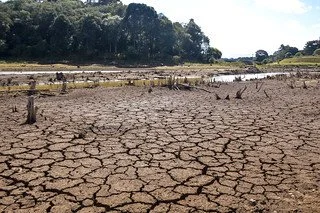
Southern California is ground zero when it comes to aridification. Drought conditions have been a way of life for so long now that most people accept that droughts are no more. What has replaced them is a more permanent state of far less water with drier and hotter conditions - known as aridification.

But that doesn’t mean everyone is cutting back on water as they have been asked — or required — to do. Case in Point:

The Las Virgenes Water District in West Los Angeles County is dangerously low on water. Yet this district, home to some of the county’s wealthiest residents, is famous for using as much water as 205 gallons of water per person. That’s almost three times the daily average in other areas of the country.

Residents have been asked to scale back. Some have, but far too many have not. Because of this, the district is getting tough.

Every residence now has a water budget based on the number of people living in that home. Flow restrictor installation warning letters are being issued to customers who use more than 150 percent of their water budget. Actual flow restrictors are installed if the customer exceeds their monthly water budget at least four times.

When installed, these flow restrictors reduce consumption from thirty gallons per minute to just one gallon of water per minute - a significant water reduction. It’s enough water for kitchen faucets to work and toilets to flush — but just barely. Forget about using water to wash cars or for lawn sprinklers. At one gallon of water per minute, that’s out of the question.

Further, to ensure that residents know the district is serious about water use reduction, if a flow restrictor is installed — and about 1,600 of them have been installed — and then (illegally) removed, residents can be fined $100 to $200 per day. Just tampering with the flow restrictor can result in a $2,500 fine.

While the district is strict about this, they are not monsters, at least initially. For instance, they usually meet with the customer to discuss the situation and advise them on ways to reduce water consumption. According to the district, most residents have no idea how much water they are using. Once they understand, residents must sign an agreement that they will voluntarily mend their ways and use less water.

“What we’re trying to do is have a path for them [the residents] to take, to get their water use under control,” explains David Pedersen, the water district’s general manager. “We’re trying to help our customers do the right thing; we’re not trying to be punitive.”

However, if the district must get punitive and a flow restrictor is installed, the first installation is for two weeks. By then the resident, it is hoped, has learned their lesson and lives within their water budget. But if they do not, the second installation is for 30 days. It goes up from there.

There are ways these residents can “mend their ways” regarding reducing water consumption: installing aerators in sinks and faucets can save vast amounts of water, and watering lawns only once per week, as is now required.

Some residents are also looking into new, high-efficiency toilets that use even less water than the federally mandated 1.6 gallons of water per flush. They are even waterless urinals. As the name implies, these urinals use no water at all.

While they will not save 35,000 gallons of water annually as they do in a school or office, the reduction in water consumption could be significant – 2,000 to 4,000 gallons per year per urinal - enough that this may be all that is necessary for some of these residents to live within their water budget.

Klaus Reichardt is CEO and founder of Waterless Co, Inc, Vista, Calif., Waterless Co., Inc, pioneers in advancing water efficiency.  Reichardt founded the company in 1991 with the goal of establishing a new market segment in the plumbing fixture industry with water efficiency in mind. Reichardt is a frequent writer and presenter, discussing water conservation issues.  He can be reached at klaus@waterless.com

Waterless Co. – Pioneers in Advancing Water Efficiency

What a Cleaning Expert Learned about Cleaning Waterless Urinals

Ben Walker is a well-known cleaning consultant. He and his company, ManageMen, Inc., work with large facilities and contract cleaning companies, helping them streamline cleaning operations, improve efficiencies, and reduce cleaning-related costs.

In 2006, his company was hired to help simplify cleaning operations for a new, large, state-of-the-art building in San Diego, CA.  As he was touring the facility for the first time, he noticed something in the restrooms he had never seen before: waterless urinals.

He was told they were installed because they can help reduce water consumption dramatically, as much as 35,000 gallons (about 132,489 L) of water per year, per urinal. In thirsty California, as well as many other western states, waterless urinals are now commonplace. In 2006, not so much.

Walker says that as far as cleaning and maintenance in the new building, everything was going perfectly – at least initially. The client was happy as were the building’s tenants. But by the third month, problems developed. The waterless urinals that the building proudly installed were releasing pungent odors that could sometimes be sniffed in the facility area.

“This was a problem I had never faced before,” says Walker. And it was not just Walker. “I found…the custodial crew members [were also] struggling to keep up with the new waterless urinals, but a very pungent odor was beginning to overtake the facility.” 

What Walker later found out was that while waterless urinals offer “huge benefits,” as he called them, allowing organizations to meet their sustainably needs, they have their own cleaning requirements, which differ somewhat from the ways traditional, water using urinals are cared for.

Would you like to learn more about the huge benefits of installing Waterless urinals? Contact us here.

"While the cleaning procedure for waterless urinals is pretty much the same as for flushed ones, they have additional process that managers need to be aware of.” 

Among the suggestions Walker shares with managers and cleaning professionals are the following:

Read the cleaning instructions. Manufacturers provide cleaning instructions with their waterless urinals. All too often, no one reads those instructions until a problem arises. Those troubles usually can be eliminated if the instructions are read before any cleaning is performed.

Make sure the staff is using the proper cleaning solutions recommended by the manufacturer. Some brands may require specific cleaning solutions. However, fortunately, most waterless urinals can be cleaned using traditional cleaning solutions such as all-purpose cleaners, sanitizers, and disinfectants.

Use manufacturer specific cleaners. The cartridge and sealing liquid serves an especially important function. It helps prevent sewer odors – such as those this building in San Diego was having – from escaping into the building. Some manufacturers require specific cleaning solutions so as not to reduce the sealing liquid effectiveness. To prevent this from happening, remove the cartridge when cleaning. (NOTE: This is Walker’s advice. This may not be necessary with all waterless urinals). Other manufacturers have cleaning solutions that work with their sealing liquids.

Wipe the urinal cleaning from the top down. Also, use a cotton cloth or microfiber towel. Some cleaning professionals use paper towels. Paper towels are good for drying hands but not effective in cleaning, including cleaning waterless urinals.

Take note as to when the cartridge was installed. Some cartridges have a noticeably short lifespan, two or three months. Interestingly, these are often the more expensive cartridges. The cartridges installed in urinals manufactured by Waterless Co. Inc, are inexpensive and can last as long as six months. Further, waterless urinals from Waterless Co., come with a unique key that can be used to quickly remove the press fit cartridge when it needs to be changed.

Don’t forget cleaning around the urinal. Splatter is an issue around urinals.  The situation is worse when water-using urinals are installed.  To help promote safety, health, and eliminate odors, custodial workers should wipe down walls around the urinal as well as floor areas on a regular basis.

Finally, and very importantly, we would like to add one more tip. Make sure that the sealing liquid, such as our BlueSeal sealing liquid, used in the cylinder is always on hand and that the cylinder is refilled when needed. In 90 percent of the cases where one notices urine odors, it is the sealing liquid that is missing. It simply needs to be replenished-added into the cartridge.

Klaus Reichardt is CEO and founder of Waterless Co, Inc, Vista, Calif., Waterless Co., Inc, pioneers in advancing water efficiency.  Reichardt founded the company in 1991 with the goal of establishing a new market segment in the plumbing fixture industry with water efficiency in mind. Reichardt is a frequent writer and presenter, discussing water conservation issues.  He can be reached at klaus@waterless.com

Waterless Co. – Pioneers in Advancing Water Efficiency

Seventh Annual Value of Water Index Released

Eighty-four percent of respondents believe ensuring a reliable water supply is necessary for a strong U.S. economy.

Vista, CA – June 28, 2022 - The Value of Water Campaign has recently released its seventh annual index, a poll tracking voters’ opinions about water-related issues. The bipartisan group examines what U.S. voters think about climate change, water infrastructure, and the environment, as it relates to water.

The survey was conducted from March 27, 2022, through April 7, 2022, with a margin of error of 3.1 percent. Among the findings of this year’s survey are the following:  

  • Eighty-four percent of respondents believe ensuring a reliable water supply is necessary for a strong U.S. economy.

  • In 2021, 42 percent of those surveyed said addressing drought was important. By 2022, that increased to 54 percent.

  • In 2021, 52 percent said they trust that the drinking water delivered to them is safe. By 2022, that decreased to 41 percent.

  • People of color are less likely (69 percent) to believe their water is safe, while 87 percent of whites believe their drinking water is safe.

  • When asked about the nation’s water infrastructure, only 7 percent said they thought it was “very good.” More than 40 percent said it was very or somewhat bad.

  • While only 11 percent of the respondents know the new infrastructure bill will bolster funding for water infrastructure, 75 percent of those aware of this were strongly or somewhat strongly approving of this use of federal money.

“There are many ways these findings can be interpreted,” says Klaus Reichardt, founder and CEO of Waterless Co., Inc., a marketer of no-water urinals. “For one thing, there is a surprising unity among voters that we need to invest in water infrastructure.”

Reichardt also says the findings indicate more people are getting increasingly concerned about water: “Each year, we see a drop in confidence. Hopefully, as more electors realize this, they will get serious about ensuring we have reliable water systems throughout the country.”

Waterless Co. – Pioneers in Advancing Water Efficiency

  About Waterless

Waterless Co. Inc. has established a well-respected reputation as being an innovative manufacturer of no-water urinal systems.  Based in Vista, Ca, the 31-year-old company is the oldest manufacturer of waterless urinals in North America.  The company offers a full line of Waterless No-Flush urinals, cleaning liquids, and cost saving accessories. Visit: www.waterless.com 


Waterless Co. Inc.

1050 Joshua Way
Vista, CA 92081 USA
800.244.6364

sales@waterless.com

Getting to Know Klaus Reichardt

The following was originally publilshed in Water Technology Magazine

It doesn’t take long to understand the harsh reality of water shortages all across the U.S. and abroad. And, it’s not just that we’re running out of water, the wealth of clean, fresh drinking water is not as abundant as it once was.

This has become a key issue for many in the water efficiency industry like Klaus Reichardt, founder and CEO of Waterless Co. Inc. in Vista, Calif. Reichardt moved from Germany to California in 1978 and attended Pepperdine University where he earned both his bachelor’s and master’s degrees in business administration.

Living in California, he quickly learned the importance of water and supplies. “Either we (California) have too much when there are floods or, more often, we have too little due to droughts,” notes Reichardt.

Starting Waterless

Like many other business owners, it was Reichardt’s passion to make a difference that led to him starting Waterless Co. in 1991.

He says while looking for a product, business or industry that he was interested in he began to solely focus on the water industry because he noticed all the problems California was having during that time.

“During the late 1980s, California suffered significant water shortages. I became aware of an old non-water urinal system used in Europe and, after extensive research into the product and how it might be used in America, I started Waterless Co. Inc. during the early 1990s,” he explains.

Reichardt’s road to success wasn’t immediate and there were many steps to take before finally moving into the position he’s in today. “At first I wore every hat in the company. I was R&D, accounts payable, accounts receivable, sales representative, account representative — you name it, I did it.”

After a while, the company began to expand and Reichardt was able to hire people to take over many of those responsibilities. As a result, he began to focus on helping the business grow even more.

“As CEO, the hat I now wear most often is the ‘vision’ hat. My most important task is to envision where the company will be a year from now, five years from now and beyond,” adds Reichardt.

Community involvement

Reichardt feels it is important to stay active in the community and to stress the importance of water conservation.

“I have been involved with the U.S. Green Building Council for years,” says Reichardt. “In fact, during the late 1990s, I urged them to make water efficiency a priority in the LEED rating system. I am also involved with the International Association of Plumbing and Mechanical Officials, the California Urban Water Council and am a supporter of the Alliance for Water Efficiency, along with other environmental and water related organizations.”

Other than being involved with well-known organizations, Waterless Co. also donates products and materials to organizations and projects that are doing important work to conserve water and directly help people.

Reichardt understands the need for clean, fresh water and is always looking for ways to help where he and his company can.

Facing challenges today

Waterless Co. has been a successful business for over 21 years now. During that time span much has changed in our culture, especially with the advancements in technology, but Reichardt says they’ve been able to adjust and maintain quality equipment throughout the years.

“I love the challenges each new day brings, from customer service to new product development to furthering the idea of water efficiency,” he says. “Additionally, finding new industries to call on and convincing people that new, simpler technologies can help them use water more efficiently both make my job worthwhile.”

Reichardt notes that having a “super crew” and representatives have helped make his job easier and made the business work.

“I am proud to say that the technology behind our urinal system has proven itself year after year,” adds Reichardt. “While new and different systems and technologies have been introduced over the past two decades, I have seen some disappear and others introduced that do not offer the features, benefits, price points or convenience of our system.”

While Waterless Co. has been able to keep up with advancements in equipment and technologies to better improve performance, it has also began to join the movement on the Internet and with social media websites.

In 2011, they hired a service to help them put their Facebook page together and start a blog. Reichardt says they still aren’t sure how effective these new tools have been, but “without question our company, its products and scores of articles on our products are all over the Internet. Being involved with social media and other marketing venues has certainly helped us in that area.”

Looking to the future

For a company looking to sustain success for years it’s important to constantly be looking towards the future to know where the market is going and how your company must adjust to the economy and technological advances.

Reichardt understands this philosophy and realizes there is still much work to be done. Here is a list of important items he and Waterless Co. hope to accomplish in the future:

  • Educating people that urinals can and should be run without the use of potable water.

  • Spreading the word that as maintenance and water/sewer costs keep rising, there is a significant financial incentive to go waterless.

  • Teaching more industries that going green (when it comes to water) makes sense for their future and is an important issue to support.

  • Reminding everyone that water is the most precious resource we as humans have.

Striving to make a change, always looking towards the future and updating products to meet the needs of customers is what has helped make Waterless Co. a successful business for many years, and Reichardt hopes that path continues.

“While our product lines meet the needs of the building industry today, we know we must always keep moving forward, developing products and services that ensure our products continue to meet those needs tomorrow,” concludes Reichardt.

reducing water consumption in Industrial facilities

They are doing this not only because they may be in areas suffering from chronic droughts or climate change, but because it is simply good business.

The less water used, the less these industries must pay for water, and in some cases, the cost of water may be one of their most significant expenses.

 Key Points:


·       Exactly how are industrial facilities reducing water consumption?

·       By changing employee behaviors. 

·       By benchmarking consumption. 

·       By analyzing their water bill.

·       By giving staffers prices and incentives for using less water.

·       By putting the staff in charge.

·       By minimizing the use of water for cleaning.

·       By checking restroom fixtures and installing water fixtures that use less or no water at all.

Learn More Here

 #waterconservation #waterconservation #waterefficiency #aridification #industrialrealestate


What Aridification Looks Like

Aridification is the progression of an area that once experienced regular rainfall events with occasional droughts to one where rainfall events are fewer and further between, and the number of droughts increases and become longer. Eventually, the entire region becomes excessively and irreversibly drier and warmer than in the past. 

Aridification is now impacting large areas of California and the western half of the United States.

View it as a call to action. We must use water responsibly and efficiently.

Here are more images of aridification, waterways which have now dried up.  This is usually a permanent situation.

aridification

St. Thomas, NV: The Doomed Town Underneath Lake Mead

The School Built in the 1930s in St. Thomas Before Being Covered by Lake Mead

As Lake Mead becomes increasingly dry due to years of drought and now aridification*, the doomed town that was covered by Lake Mead in 1938 is resurfacing.

This seven-minute video by the National Parks Service shows us the history of St. Thomas, Nevada, the town underneath Lake Mead.

 Watch the Entire seven-minute Video Here.

 Key Points:

The town was once populated by an Indian tribe. They called it the “Lost City.”

Mormons moved there in 1865, thinking it was part of Utah.  They named it St. Thomas.

At one point, the town had 500 citizens.

When they realized it was not in Utah, most moved. But about 100 people remained in the town.

In 1928, President Calvin Coolidge signed a bill authorizing the construction of Hoover Dam.

The residents of St. Thomas were told they had to leave by 1935.  One man, Hugh Lord, remained in the town until 1938.  As the water rose around his house, he had to paddle a boat to get out of town.

 *Aridification is the progression of an area that once experienced regular rainfall events with occasional droughts to one where rainfall events are fewer and further between, and the number of droughts increases and become longer. Eventually, the entire region becomes excessively and irreversibly drier and warmer than in the past. 

18 Minute Netflix Special: The World's Water Crisis Explained

water crisis

In partnership with Vox Media Studios and Vox, this enlightening explainer series will take viewers deep inside a wide range of culturally relevant topics, questions, and ideas.

Each episode will explore current events and social trends pulled from the zeitgeist, touching topics across politics, science, history and pop culture -- featuring interviews with some of the most authoritative experts in their respective fields.

In this episode: The global water crisis is at an inflection point. How do we price our most valuable resource, while also ensuring access to it as a human right?

Click Here to Watch: Explained | World's Water Crisis | FULL EPISODE | Netflix - YouTube

Disruptive Technologies and Water

disruptive water technology

When most people hear the word disruptive, they think “disturbing,” “unsettling,” “harmful,” and even “dangerous.” However, as we use the term here, it is far less sinister. It simply means using a new or emerging technology that displaces an older, established technology.

Waterless urinals are a perfect example. Before 1991, North America was home to few, if any, waterless urinals. Virtually all urinals available for installation used three to five gallons of water per flush. But slowly, no-water urinal alternatives have caught on. They disrupted entire markets and changed the way purchasers select restroom fixtures in commercial facilities. 

But waterless urinals are not the only disruptive technology that has been introduced in recent years when it comes to water. Here are a few more we should know about, especially now, as aridification sets in around parts of the U.S.

Smart Irrigation

For generations, farmers have had to determine which crops need water and how much, virtually by instinct. However, due to the dwindling supply of water – especially in agriculture and especially for farmers in the western half of the United States – using intuition to determine crop water demand is out of the question. The old instinct method is being replaced with the Internet of Things (IoT). Today, “smart” irrigation systems tell farmers exactly which crops need more water and which do not. These systems can also report where leaks may be found. 

Smart Metering

Smart metering systems have been making significant inroads in helping India prevent water waste. Installed in apartment buildings, these systems quickly report any sustained upsurge in water usage and where it is happening. Building owners and managers can rapidly locate a leak and repair it. It is estimated that this technology has curbed water consumption in Indian apartment buildings by as much as 35 percent.

Advanced Desalination Systems

Contrary to what many think, desalination systems, which remove salt from water, making it potable (drinkable) for humans and other living things, are not new. Desalination methods date back to the 16th century and were based on evaporation. However, in the 20th century, very arid countries such as Saudi Arabia and Israel started building large-scale desalination plants. These plants shared two things in common: they were expensive to operate and very energy demanding.

Today, disruptive technologies have been introduced that make these plants far less costly to operate as well as less energy-intensive. Some are even designed to run on renewable energy sources. This is a significant breakthrough. As the world population grows, it will be placing greater and greater demand on dwindling water resources. Getting water from oceans is one of our best options. 

Disruptive Groundwater Technologies

It is estimated there are three million trillion gallons of groundwater around the globe today. That's a tremendous amount of water that can meet the needs of the entire world's population for decades to come. However, getting to that water has always been a problem. Some of it is thousands of feet under the surface, making it impossible to reach or, if physically possible to reach, cost-prohibitive. New extraction technologies have been introduced that are lowering costs and replacing old digging systems. Reliable access to underground water is becoming a reality.  However, ground water needs to be replenished – and it can take ten times more water than what was extracted for replenishment.

Investments

A few years back, many investors took it for granted that the old ways of using water on farms, metering, removing salt from water, and digging for water were here to stay. Now they believe many more water-related disruptive technologies have yet to be invented. These new disruptive technologies are opening the doors to even more opportunities, and investors are now willing to take the risk and invest in them. 


Although it is true we are facing some severe water challenges around the globe, thanks to these and many more disruptive technologies, it’s possible that many of these challenges will be addressed and at least reduced in the not-too-distant future.

 Waterless Co., Inc: Pioneers in Advancing Water Efficiency

Klaus Reichardt is CEO and founder of Waterless Co, Inc, Vista, Calif.  Reichardt founded the company in 1991 with the goal of establishing a new market segment in the plumbing fixture industry with water efficiency in mind. Reichardt is a frequent writer and presenter, discussing water conservation issues.  He can be reached at klaus@waterless.com.