Upgrading to sustainable restroom fixtures is no longer just an environmental statement, it’s a smart financial strategy. A landmark utility audit conducted at Kansas State University’s Department of Civil Engineering highlights exactly how much money institutions throw down the drain with traditional flush fixtures, and how fast they can achieve a return on investment (ROI) by switching to waterless urinals.
The True Cost of Traditional Flush Urinals
During a campus-wide utility audit, master’s thesis research student Kimberly Pierson evaluated the water consumption of various fixtures, including faucets, toilets, showers, and urinals.
Her research revealed that campus urinals used between 0.5 and 1.5 gallons of water per flush (GPF). While this indicates newer, efficient models, traditional flush urinals carry hidden long-term costs:
The Aging Factor: While many older urinals guzzle up to 3.0 GPF, even standard 1.0 GPF models degrade over time, leading to mechanical wear that significantly increases water usage with age.
Seasonal Fluctuations: Water consumption naturally spikes during warmer months. Increased hydration and higher shower frequencies during the summer inevitably drive-up seasonal utility bills.
The Research Objective: Pierson’s study aimed to establish a standardized water-auditing process that state- and state-funded facilities can use to determine consumption baselines, implement energy auditing procedures, and project exact ROI on fixture upgrades.
Calculating the Hidden Expenses of Commercial Restrooms
Pierson’s data breaks down the annual cost of water per fixture (based on baseline utility rates):
Urinal Efficiency
Annual Water Cost Per Fixture
0.5 GPF (High-Efficiency)
$10.80 / year
1.5 GPF (Standard)
$32.40 / year
The Campus-Wide Financial Impact
To understand the macroeconomic impact, we can look at the campus demographics at the time of the study, which included 4,240 students (approximately 2,120 males). Following standard commercial plumbing ratios of one urinal per twenty men, the campus required 106 urinals.
Average Cost Per Urinal: $21.60 annually
Total Annual Urinal Water Bill: $2,300 per year
While $2,300 may seem modest for a small campus, it is critical to note that these figures are based on historic utility rates. With the cost of municipal water rising dramatically over the last decade, today's operating costs for the exact same system would be higher.
The Waterless Urinal ROI: Paying Dividends
The financial benefit of commercial water conservation becomes clear when analyzing the payback period of a facility upgrade.
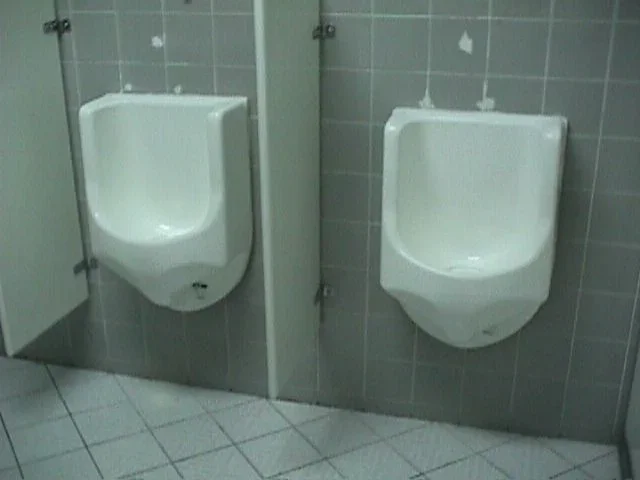
By retrofitting the campus with waterless urinals, the university could have eliminated the recurring costs of urinal water consumption.
Payback Period: Approximately 5 months
Long-Term Dividends: After the initial five-month ROI window, the waterless fixtures operate at a profit, generating thousands of dollars in compounding utility savings year after year.
Why Modern Facilities are Switching to Waterless Technology
Beyond the direct savings on your water bill, upgrading to waterless urinals provides several operational advantages:
1. Reduced Maintenance Costs: No flush valves, sensors, or moving parts means fewer mechanical breakdowns and plumbing visits.
2. Drought Resilience: Protects commercial facilities from rising municipal water tariffs and strict local environmental regulations.
3. LEED Certification Points: Enhances building sustainability profiles, contributing directly to green building certifications.
For property managers and educational institutions alike, transitioning to waterless restroom technology is a proven method to slash operational expenses and secure immediate, long-term fiscal dividends.