How preventive cleaning, targeted treatments, and better maintenance practices help facilities eliminate persistent restroom odors.
Persistent restroom odors can undermine even the best cleaning programs. A restroom may look clean, yet unpleasant smells can linger around urinals, floor drains, and tile grout. For facility managers and building service contractors, the solution often requires looking beyond routine mopping and addressing the contaminants responsible for the problem.
A more effective approach combines preventive maintenance, appropriate cleaning products, specialized equipment, and consistent attention to odor-prone areas.
1. Address the Source of the Odor
One of the most common causes of restroom odors is urine residue that accumulates around urinals and toilets. When urine penetrates porous flooring or grout, routine mopping may not remove all the contamination.
As residue accumulates, odors can return whenever the floor becomes damp. Applying more fragrance or increasing the amount of general-purpose cleaner may provide little lasting relief.
Instead, cleaning teams should identify recurring problem areas and select methods designed to remove embedded organic matter. Depending on the flooring and the severity of the buildup, this may involve targeted scrubbing, specialized cleaning solutions, or extraction equipment.
The objective is straightforward: remove the source of the odor rather than cover it up.
2. Give Grout and Textured Flooring Special Attention
Tile and grout remain common in commercial restrooms because of their durability. However, grout is porous, and textured surfaces can trap contaminants that ordinary mopping may leave behind.
Over time, these materials can accumulate soil, urine residue, and other organic matter. The result is a recurring odor problem that becomes increasingly difficult to manage through daily cleaning alone.
Facility managers should consider periodic deep cleaning with equipment capable of reaching grout lines and textured surfaces. Removing loosened soil and cleaning solution through appropriate extraction methods can further improve results.
Sealing suitable grout surfaces can also help limit future absorption. Before selecting a treatment, cleaning professionals should verify that the products and procedures are compatible with the existing flooring and sealant.
3. Make Floor Drains Part of the Cleaning Program
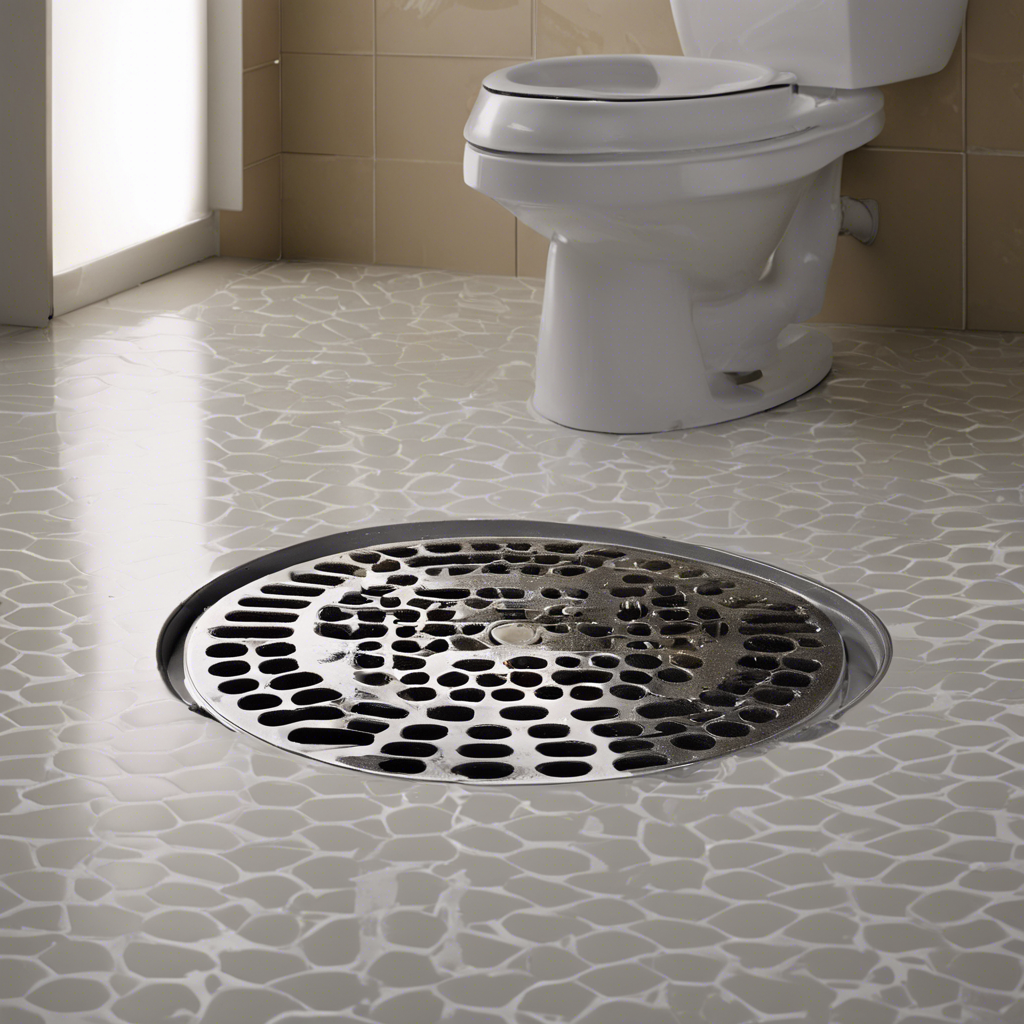
Floor drains are another potential source of persistent restroom odors. Organic debris can accumulate inside drain lines, providing material that odor-producing bacteria can break down.
Drain traps also play a vital role. When a trap dries out or fails to maintain its water seal, sewer gases may enter the restroom.
A comprehensive maintenance program should include regular drain inspections and attention to traps that may have dried out or become blocked. For floor drains that are rarely used, a trap seal product such as Everprime can help by maintaining a liquid barrier in the P-trap, which blocks sewer gases from escaping into restrooms, basements, and mechanical rooms.
To clean the drain pipes themselves, an enzymatic drain-maintenance product may help break down organic buildup when used according to manufacturer instructions. However, these products are not a substitute for correcting plumbing defects, clearing serious blockages, or addressing other underlying problems.
Including drains in scheduled maintenance helps prevent them from becoming an overlooked source of recurring complaints.
4. Use Preventive Measures to Reduce Cleanup Time
Preventing contamination is often more efficient than removing it after it has accumulated.
Urinal mats, splash guards, and related products can help capture urine before it reaches the floor. Their effectiveness, however, depends on appropriate placement, regular inspection, and timely replacement.
Saturated, deteriorating, or poorly maintained mats may become another source of odor rather than a solution.
Cleaning teams should establish replacement schedules based on restroom traffic and actual product performance. High-use facilities may require more frequent attention than smaller, lightly used restrooms.
Preventive measures can reduce the need for repeated scrubbing and corrective cleaning, allowing staff to concentrate on maintaining consistently clean conditions.
5. Match Cleaning Methods to the Flooring
Modern commercial restrooms increasingly feature new flooring materials, textured finishes, and design elements that may require different maintenance procedures.
Using the same chemicals and equipment on every surface can produce inconsistent results or damage flooring and protective coatings.
Facility managers should develop cleaning protocols based on manufacturer recommendations, surface characteristics, and the type of contamination involved. Staff training is equally important, particularly when products require specific dilution rates, dwell times, or application methods.
The right combination of cleaning agents and equipment can improve soil removal while protecting the appearance and service life of the floor.
6. Build Odor Prevention Into Routine Inspections
Lasting odor control requires consistency. Rather than waiting for complaints, cleaning supervisors and facility managers should incorporate odor-prone areas into routine inspections.
A practical checklist can include:
Inspecting the floor around urinals and toilets for residue and recurring stains.
Checking grout lines and textured surfaces for embedded soil.
Examining mats and splash guards for saturation or deterioration.
Inspecting floor drains and ensuring traps maintain their water seals.
Verifying that cleaning products are diluted and applied correctly.
Scheduling periodic deep cleaning where routine maintenance is insufficient.
Persistent odors that remain after thorough cleaning may indicate a plumbing leak, damaged grout, a defective drain trap, or another underlying issue requiring further investigation.
A Proactive Strategy Delivers Better Results
Restroom odor control is not simply a matter of making a space smell fresh. It requires a coordinated approach to cleaning, floor care, drain maintenance, staff training, and preventive inspections.
By identifying odor sources early and selecting appropriate cleaning methods, facilities can reduce recurring complaints, improve the restroom experience, and avoid unnecessary labor associated with repeated corrective cleaning.
For facility managers and building service contractors, the most effective strategy is to make odor prevention a routine part of restroom maintenance—not an occasional response to a problem.
-Klaus