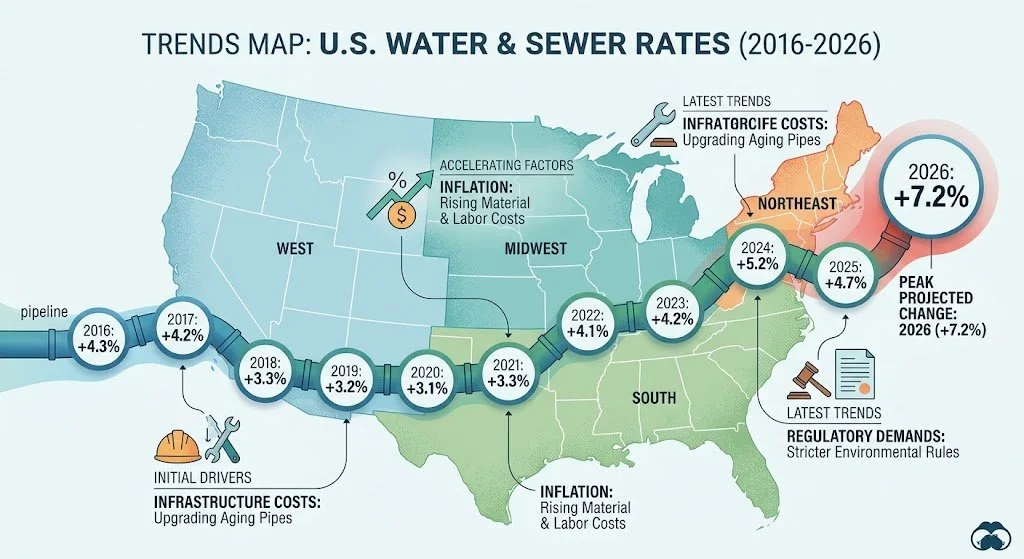
AI Generated
Why the Increases:
1. Aging Water Infrastructure
The U.S. Environmental Protection Agency's most recent Drinking Water Infrastructure Needs Survey and Assessment estimates the country needs $625 billion in improvements to drinking water systems over the next 20 years — a 32 percent increase over the prior survey. Factor in wastewater and stormwater needs from EPA's 2022 Clean Watersheds Needs Survey, and the total national infrastructure gap exceeds $1.2 trillion. Utilities are raising rates now to start funding those repairs.
2. Shrinking Federal Support
The federal government once covered most of the cost of water collection and delivery. Programs like the Bipartisan Infrastructure Law have added some funding in recent years, but nowhere near enough to close the gap — leaving states, municipalities, and ratepayers to cover more of the cost themselves.
3. Utility Bills Are Absorbing Costs Once Covered by Property Taxes
To avoid politically unpopular property tax hikes, many local governments are shifting water system costs onto utility bills instead — a quieter, but no less real, increase for building owners and tenants.
4. Population Growth in Water-Stressed Regions
Some of the fastest-growing parts of the country, including much of the Sun Belt and the West, are also the regions facing the greatest water supply challenges. Growth is putting additional strain on already limited resources.
5. Fewer Clean Water Sources
Pollution, contamination, and environmental degradation continue to shrink the pool of rivers, lakes, and aquifers utilities can safely draw from — tightening supply even as demand holds steady or grows.
6. Shifting Climate Patterns
Changes in precipitation and snowmelt are straining the water systems that communities depend on for health, agriculture, and energy production, pushing utilities to invest heavily in resilience and alternative supply.
7. Basic Supply and Demand
As reliable water supplies tighten under the pressures above, prices rise to match. It's the same economic principle that governs any limited resource — water is no exception.