Learn how to clean and maintain waterless urinals, replenish liquid sealant, replace cartridges, and manage long-term maintenance costs.
Waterless urinals look much like conventional urinals, but they operate differently. Instead of using flushing mechanisms and water, waterless urinals use specialized cartridges and liquid sealant to control odors and move urine into the drain system. This design eliminates the need for flushing water while reducing water consumption and supporting more sustainable restroom operations.
"Like their traditional counterparts, waterless urinals are made of similar materials and are offered in different colors and designs," says Klaus Reichardt, managing partner of Waterless Co., a leading marketer of waterless urinals and related restroom products based in Vista, California. "No-flush urinals can be installed virtually anywhere conventional urinals are used."
According to Reichardt, waterless urinals connect to a standard drain line, just like conventional models. However, they do not retain standing water at the base of the fixture.
"Instead, waterless urinals use a trap or cartridge filled with a thin layer of liquid sealant that sits atop the drain area," Reichardt explains. "Urine passes through the cartridge and the sealant, which forms a barrier that prevents odors from escaping. Because urine is heavier than the sealant, it sinks below the barrier and flows down the drainpipe."
Waterless urinals first appeared in Europe more than 100 years ago. However, their popularity declined until growing concerns about water efficiency, conservation, and sustainability sparked renewed interest approximately two decades ago.
Today, there are roughly two or four manufacturers marketing waterless urinals in the United States, including Waterless Co., Inc. Although most systems operate on the same basic principle, their maintenance requirements and long-term operating expenses can differ considerably. These expenses, commonly referred to as the total cost of ownership (TCO), include cleaning, sealant replenishment, cartridge replacement, and other servicing requirements.
Waterless Urinal Cleaning and Routine Maintenance
One of the advantages of waterless urinals is that routine cleaning is relatively straightforward. Cleaning crews generally spray a nonabrasive cleanser onto the fixture and wipe down its interior and exterior surfaces.
Abrasive cleaners and harsh chemicals should be avoided because they can damage the urinal's finish and potentially affect the cartridge system.
"Some manufacturers have developed their own products specifically formulated for cleaning waterless urinals," says Reichardt. "These products are effective and easy to use."
Reichardt also advises against pouring large amounts of water down the drain. In most cases, this is unnecessary for routine cleaning and can inadvertently wash the liquid sealant into the drain.
Regular cleaning, maintenance, and servicing of waterless urinals are typically handled by a facility's cleaning crew. Responsibilities include cleaning the fixture, replenishing the liquid sealant, and replacing cartridges when necessary.
Replenishing Liquid Sealant in Waterless Urinals
Over time, trace amounts of liquid sealant can pass into the waste line during normal use. Consequently, the sealant must be replenished periodically to maintain the odor barrier.
In a typical school, for example, this may require one or two refills per month, depending on restroom traffic and usage.
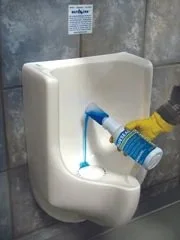
To simplify this process, Waterless Co., Inc. includes a PortionAid device that dispenses the precise amount of liquid sealant needed directly into the cartridge. The process takes approximately 10 to 20 seconds.
Regular sealant replenishment is an important part of waterless urinal maintenance. Maintaining the appropriate sealant level helps preserve the odor barrier and supports the system's intended operation.
How Often Should Waterless Urinal Cartridges Be Replaced?
Cartridge replacement is another important component of maintaining waterless urinals. The trap or cartridge used in Waterless Co., Inc. urinals generally need to be replaced three to four times per year, or approximately every 7,000 uses. Replacement intervals for other manufacturers' systems may vary.
For Waterless Co., Inc. models, the replacement process typically takes three to four minutes and involves the following steps:
Remove the old cartridge: Use a specialized key or tool to unlock and remove the existing cartridge.
Empty and dispose of the cartridge: Slowly wiggle the cartridge out of position, allowing its contents to drain into the waste line before disposing of it.
Inspect and clean the drain housing: Depending on the condition of the drain housing, cleaning may be necessary. In some cases, hot water is poured down the line to help clear accumulated buildup.
Install the replacement cartridge: Insert the new cartridge into position and add the appropriate amount of liquid sealant.
Although cartridge replacement procedures are generally similar across manufacturers, the cost of replacement parts can vary considerably.
Some waterless urinal cartridges cost only a few dollars, while others can exceed $40. In addition, higher-priced cartridges do not necessarily last longer than less expensive alternatives. Some may actually have shorter service lives, increasing long-term maintenance and operating expenses.
Understanding the Total Cost of Ownership of Waterless Urinals
When evaluating waterless urinals, facility managers should look beyond the initial purchase price. The total cost of ownership includes the ongoing expenses associated with cleaning, liquid sealant replenishment, replacement cartridges, and labor.
Cartridge prices, replacement frequency, and maintenance requirements can vary significantly among manufacturers. A cartridge with a lower purchase price may offer better long-term value if it lasts longer and requires fewer replacements.
For building owners, property managers, and facility maintenance professionals, understanding these differences can help when comparing waterless urinal systems and estimating their long-term operating costs.
For more information about waterless urinal cleaning, maintenance, cartridge replacement, and servicing requirements, contact a Waterless Co. representative.
-Klaus
Key Takeaways: Waterless Urinal Maintenance
Installation and Design: Waterless urinals resemble conventional fixtures in materials, colors, and design. They connect to standard drain lines and can be installed in most locations where traditional urinals are used.
How They Work: Instead of using flush valves and standing water, waterless urinals rely on specialized cartridges and liquid sealant. The sealant creates a barrier that helps prevent sewer odors from escaping.
Routine Cleaning: Cleaning crews can maintain waterless urinals by wiping down interior and exterior surfaces with nonabrasive cleaners. Harsh chemicals and excessive amounts of water should be avoided.
Liquid Sealant Replenishment: Small amounts of sealant are lost during normal use and must be replenished periodically. In a typical school, this may be necessary once or twice a month, depending on usage.
Cartridge Replacement: Waterless Co., Inc., cartridges generally require replacement three to four times annually, or approximately every 7,000 uses. The replacement process typically takes three to four minutes.
Total Cost of Ownership: Maintenance expenses vary among manufacturers. Cartridge prices, replacement frequency, sealant requirements, and labor should all be considered when evaluating the long-term cost of a waterless urinal system.