What is the Difference Between Water Conservation and Water Efficiency?

We asked AI to help us answer this question. Here’s what AI told us. Our thoughts are below:

Great question! 🌊 While both water conservation and water efficiency aim to reduce water use, they approach the goal in different ways:

💧 Water Conservation

  • Behavior-based: Involves changing habits to use less water.

  • Examples:

    • Turning off the tap while brushing your teeth.

    • Watering your garden during cooler hours to reduce evaporation.

    • Only running the dishwasher when it’s full.

  • Goal: Use water only when necessary and avoid waste.

🚿 Water Efficiency

  • Technology-based: Focuses on using products that require less water to perform the same task.

  • Examples:

    • Installing waterless urinals, low-flow faucets, or toilets.

    • Using water-efficient dishwashers or washing machines.

  • Goal: Get the same results with less water through smart design and engineering.

🧠 The Key Difference

  • Conservation is about how you use water.

  • Efficiency is about what you use to do it.

Think of it this way: conservation is choosing to shower for 5 minutes instead of 10, while efficiency is using a showerhead that uses less water per minute. Combine both, and you’re a water-saving superhero💪.

I largely agree with AI’s points here but want to add based on my personal experience: Water efficiency measures, like installing high-efficiency toilets, waterless urinals, and water monitoring systems, encourage building occupants to change their habits and use water more responsibly. This shift makes water reduction a shared responsibility, increasing the effectiveness of these initiatives.

In other words, we all become part of the solution, addressing together our water challenges.


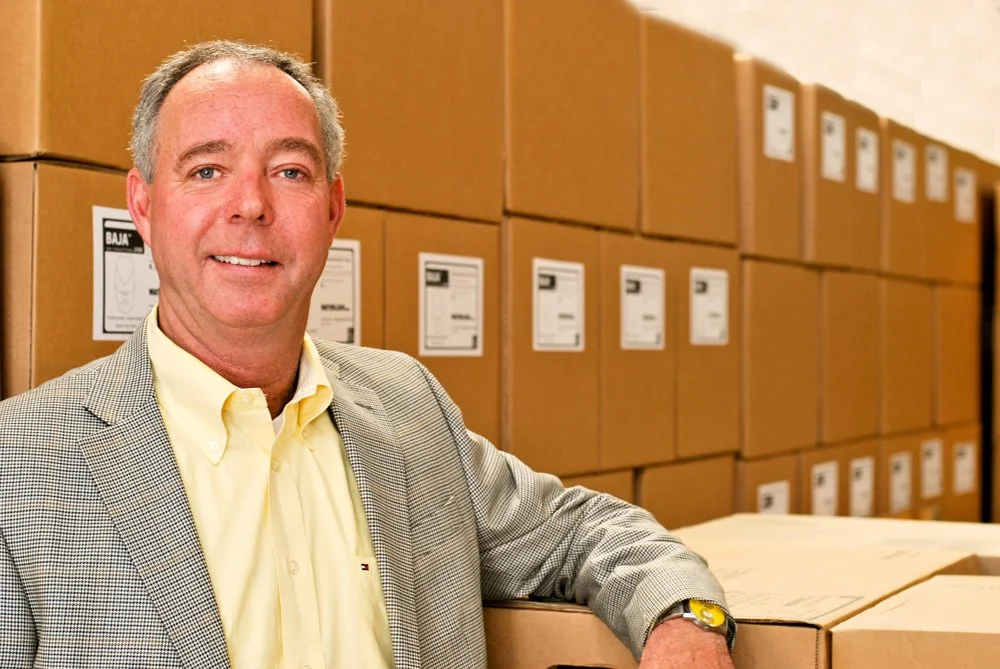
Klaus Reichardt, founder and CEO of Waterless Co. LLC in Vista, California, is a recognized authority on water conservation. Since 1991, he has led the company to innovate plumbing products like the Waterless No-Flush urinal, which operates entirely without water.

To contract Klaus, click here
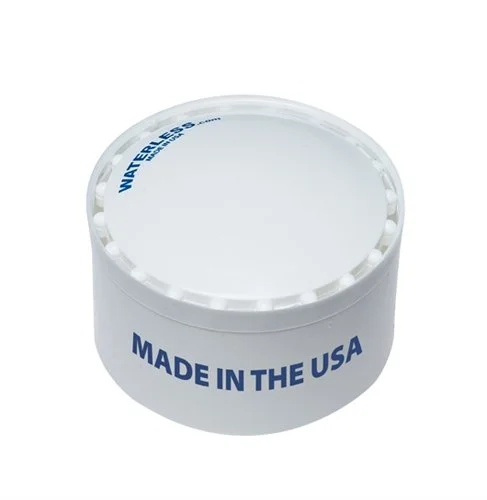
The EcoTrap From Waterless Co., Inc: The Essential Component

The EcoTrap, product number, #3001, is a key component for Waterless No-Flush urinals, designed to work with BlueSeal sealing liquid for effective operation. This trap insert creates a barrier that prevents odors and sewer gases from escaping your waterless urinal system.

Key Features and Benefits

  • Universal Fit: Compatible with all urinals manufactured by Waterless Co., Inc., including both ceramic and High Performance Composite models.

  • Eco-Friendly: The trap is fully recyclable.

  • Cost-Effective: Less expensive than competing trap inserts and cartridges.

  • Durable and Long-Lasting: Built for extended use and can be refilled multiple times with BlueSeal sealing liquid, reducing the need for frequent replacements.

  • Made in USA: Manufactured in the United States, ensuring quality craftsmanship.

How the EcoTrap Works

The EcoTrap and BlueSeal sealing liquid work together to form an effective barrier, keeping your urinal system odor-free without the need for water. Plus, unlike other trap cylinders, the EcoTrap is long lasting.

Find It In our Online Shop: Price: $9.95

The 5 Global Leaders in Water Efficiency (And Where the U.S. Stands)

Water scarcity affects billions worldwide, making water efficiency more critical than ever. While many focus on temporary conservation measures during droughts, true progress comes from long-term efficiency solutions that create lasting change.

Understanding the Difference: Conservation vs. Efficiency

Water conservation typically involves temporary restrictions during crises—think drought-related usage limits or emergency measures.

Water efficiency takes a different approach, focusing on:

  • Innovative technologies and smart systems

  • Advanced management and monitoring infrastructure

  • Water-saving fixtures and equipment

  • Public awareness campaigns that make efficiency a lifestyle

As Klaus Reichardt, CEO of Waterless Co., Inc., explains: "These approaches create lasting reductions in water consumption, and these reductions can be very significant."

The Top 5 Water-Efficient Countries

According to WorldoStats.com, these nations lead the world in water efficiency:

Singapore – Masters of desalination, water recycling, and comprehensive rainwater harvesting systems

Israel – Global pioneer in drip irrigation technology and wastewater reduction programs

Netherlands – Leverages advanced water recycling with strong public-private partnerships driving innovation

Denmark – Operates a national leak detection system with sophisticated monitoring and rapid repair protocols

Australia – Champions water-efficient agriculture and has created innovative water trading markets

Where Does the U.S. Stand?

While not making the top five, America is making meaningful progress. The biggest challenge? Aging, leaky infrastructure that wastes billions of gallons annually.

The encouraging news: Major water efficiency projects launched in the past two years are tackling waste nationwide. Since COVID-19, commercial buildings have accelerated retrofits with water-saving technologies, including no-flush urinals and other efficient fixtures.

"These upgrades are part of broader initiatives to make buildings healthier, safer, and more resilient to environmental risks," notes Reichardt. "Becoming more water efficient is one of their key goals."

The Path Forward

As water challenges intensify globally, the countries leading in efficiency offer valuable blueprints. Their success comes from combining technology, policy innovation, and cultural shifts toward valuing every drop.

The question isn't whether we can afford to invest in water efficiency—it's whether we can afford not to.

BlueSeal® - The Essential Component for No-Flush™ Urinals

BlueSeal® is our premium, long-lasting, and biodegradable trap seal liquid specifically designed for waterless urinal systems. This innovative solution enables No-Flush™ urinals to function effectively while preventing odors.

How It Works

BlueSeal® has a lower specific gravity than both water and urine, which provides two key benefits:

  • During use: The liquid remains in the trap for extended periods, with only small amounts carried away with each use

  • During non-use: BlueSeal® stays in the trap indefinitely, creating a permanent odor seal

Key Features

Temperature Performance

  • Zero evaporation at temperatures up to 100°F

  • No freezing until -70°F

  • Reduces or eliminates costly urinal winterization procedures

Compatibility & Durability

  • Compatible with commercially available cleaning products

  • Will not be damaged by standard EcoTrap® cleaners

  • Biodegradable and environmentally responsible

Application & Maintenance

Easy Installation

  • Add 3-ounce portions directly into the urinal EcoTrap®

  • Use the included PortionAid for accurate measurement

  • Follow bottle instructions for best results

Simple Maintenance

  • Clean waterless urinals the same way as conventional urinals

  • Refill BlueSeal® using the PortionAid for precise measurement

  • Fill PortionAid by squeezing the bottle, then pour directly into EcoTrap® holes

  • PortionAid design minimizes waste and ensures accurate dosing

Product Options

  • Standard bottles with PortionAid included

  • Gallon size available (Item #1101)

  • MADE IN THE USA

More BlueSeal Features and Benefits Here

Quiz: Predicted 2025 “False Summer” Crisis

Image on Pixabay by Jess Hoots

☀️ Hey Friends! Before you dive into your day—or your first coffee—let’s stir in a splash of curiosity. We’ve brewed up a quick and quirky quiz all about “False Summers” and their sneaky impact on water consumption.

🔍 But first things first: read this eye-opening article by Klaus Reichardt on how these surprise warm spells can wreak havoc on our water systems:

https://lnkd.in/gPfeSz94

🧠 Then, pop on your thinking cap (bonus points if it’s sun-proof), and take on these five fast questions. No pressure—just a fun way to learn something new while your caffeine kicks in.

Ready to play water detective? 💧 Let’s go!

1. What weather event is expected in 2025?
a) Record hurricanes
b) False summers with prolonged warm, dry spells
c) Heavy autumn rainfall
d) Early snowfall

2. Water consumption during a false summer could rise by:
a) 50–100%
b) 200–400%
c) 500%
d) 10–20%

3. True or False: Up to half of landscape irrigation water may be lost to evaporation during false summers.

4. Which of the following is a recommended proactive solution?
a) Real-time water usage monitoring
b) Building bigger reservoirs
c) Increasing irrigation hours
d) Turning off all plumbing systems

5. What restroom upgrade is highlighted as the major water saver?
a) Dual-flush toilets
b) Waterless urinals
c) Touch-free soap dispensers
d) High-pressure showers

Let me know how you did on the quiz…Klaus

A Smart Solution to the "False Summer Surge": Why Waterless Urinals Matter

Image on Pixabay by Heung Soon

Scientists warn that in 2025 North America may face false summers—extended, unseasonably warm and dry periods lasting into October or November. These events can overwhelm communities, especially water systems.

The Crisis

  • Water demand may spike 200–400%.

  • Landscaping irrigation losses increase due to faster evaporation.

  • Buildings use more water for cooling, straining infrastructure.

  • Old or stressed plumbing is more prone to leaks from fluctuating temperatures and heavy irrigation use.

Risks for Facilities

  • Increased leaks from expanding/contracting pipes.

  • Irrigation wear leading to broken valves and sprinkler heads.

  • Rising utility bills signaling hidden problems.

What Facility Managers Can Do

  • Leak detection systems that send real-time alerts.

  • Water monitoring tools to catch sudden usage spikes.

  • Routine plumbing inspections of pipes and irrigation.

  • Tenant education on spotting leaks.

  • Accounts Payable monitoring for unusual water bill increases.

Long-Term Solutions

  • Install water-efficient restroom fixtures (low-flow toilets, faucets, showerheads).

  • Adopt waterless urinals, which save thousands of gallons yearly without sacrificing hygiene.

Bottom Line

False summers may bring serious water crises, but with smart monitoring, proactive maintenance, and efficiency upgrades, facilities can reduce risk, cut costs, and conserve resources.

Upgrade Your Primary Bathroom with a Waterless Urinal

Waterless No-Flush Urinals have already made their mark in airports, schools, factories, and even military bases—proving they save water, cut energy use, and stay fresh without the hassle of constant maintenance.

Now, you can bring those same benefits home. Imagine a urinal in your primary bathroom that looks sleek and modern, never needs flushing, and doesn’t waste a single drop of water. That’s the beauty of a Waterless No-Flush Urinal.

No water line. No flush handle. No odor. Just a clean, efficient, and hygienic solution that redefines convenience.

Perfect for homes where space and practicality matter, a waterless urinal also adds an unexpected touch of elegance. It’s a smart upgrade that makes your bathroom more sustainable, stylish, and surprisingly comfortable.

For More Info, Contact Us Here.

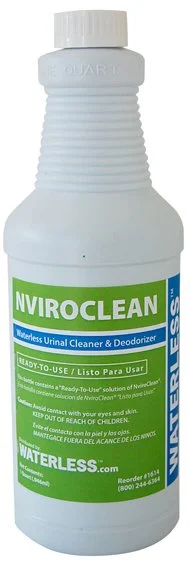
NVIROCLEAN: The SPRAY and WALK AWAY CLEANING SOLUTION

nviroclean from waterless co

Music to every cleaning worker's ears.

NviroClean™ from Waterless Co., Inc. revolutionizes urinal maintenance by eliminating the need for wiping or scrubbing. Simply spray the product in and around any urinal—waterless or traditional—and let NviroClean do the work for you.

How It Works

The advanced formula breaks down soils and organic materials on contact. For waterless urinals, regular use helps reduce buildup in the trap and cartridge insert at the urinal's base, effectively extending cartridge life and reducing maintenance costs.

Versatile Applications

  • Waterless No-Flush urinals

  • Traditional flushed urinals

  • Drain lines (breaks down sediments to keep drains cleaner)

Simple Instructions

Just spray and walk away—it's that easy. Always follow the instructions on the bottle for best results.

For more information:

  • Visit: www.waterless.com

  • Call toll-free: 800-244-6364

How Much Water Do Airports Use? A Look at Major US Hubs

Image by Jess Hoots Found on Pixabay

Water Use at Airports

  • Scale: Large international airports are among the biggest non-municipal water users.

  • Consumption Levels:

    • Annually: ~132 million gallons to over 1 billion gallons

    • Daily: ~400,000 to 3 million gallons (1.4–11 million liters)

Major Areas of Use

  • Restrooms: Biggest share — toilets, urinals, and sinks (all potable water).

  • Other Uses:

    • Drinking fountains and restaurants

    • Cleaning (floors, terminals, windows, aircraft)

    • Cooling/HVAC systems (chillers, cooling towers)

    • Landscaping and irrigation

    • Specialized uses — aircraft de-icing and fire suppression

Why So High?

  • Airports function like large cities, combining aspects of office buildings, malls, industrial facilities, and public infrastructure.

  • Much of the water use isn’t for planes directly, but for the passengers and facilities that serve them.

Conservation Efforts

Airports are adopting strategies to reduce reliance on local water supplies, including:

  • Leak detection and repair

  • Low-flow or sensor fixtures

  • Waterless urinals

  • Rainwater harvesting and greywater reuse

  • On-site wastewater treatment for irrigation/cooling

  • Integrated water resource management tied to regional water stress

  • Benchmarking consumption per passenger or aircraft movement

Key Takeaway

Airports consume massive amounts of water, but the majority isn’t for airplanes, the people, facilities, and infrastructure that keep airports running. Increasingly, airports are turning into leaders in sustainable water management through technology and efficiency practices.

About Arizona's Waterless Urinal Mandate

Image on Pixabay by Renne Gossner

Many of our distributors and customers are now contacting us regarding Arizona's waterless urinal law.

Below is a summary of the law.

We are sharing this because other regions of the country are now considering similar legislation using Arizona's law as a model.

Legislative History

In spring 2004, the Arizona Legislature approved Senate Bill 1275, directing that all new state-owned buildings must install waterless urinals.

A waterless urinal uses no water and has no flush handles, manual or automatic. The technology enables urine to flow into a cylinder located at the base of the urinal and then into a sewer drain. This prevents restroom odors.

More information is below.

The law took effect on January 1, 2005, and applies to every agency facility, university building, veterans' home, prison, and office complex that was erected or fully renovated after that date.

Core Requirements

  • All new state buildings or major renovations must specify waterless urinals in plumbing plans.

  • Existing facilities undergoing minor upgrades are exempt from full renovation until the upgrades are complete.

  • The Arizona Department of Administration was charged with updating its Facility Standards Manual to incorporate these fixtures and training specifications for maintenance staff.

How Waterless Urinals Work

  • They use a mechanical trap or an oil-based sealant cartridge to prevent odors, rather than flushing water.

  • Typical cartridges last 3–12 months before replacement, depending on the no-water urinal selected.

  • No water line is tied to the fixture; only a small drain connection is required.

Mandated Building Types

  • All new Arizona state government buildings after the mandate’s effective date, including:

    • University buildings

    • Prisons and detention centers

    • Veterans’ homes

    • State office complexes

    • Agency facilities

Renovations Covered

  • Major renovations: Any full renovation of a state-owned building after January 1, 2005, required waterless urinal installation in restroom plumbing plans.

  • Minor upgrades: Buildings undergoing partial or minor upgrades were exempt until a full renovation was undertaken.

Facilities Not Covered

  • The law does not cover privately-owned buildings, schools not owned by the state, or federal buildings (unless the federal government or Department of Defense voluntarily applied similar standards).

  • Local government buildings (county or city) and private sector facilities were not included unless they adopted their own mandates or rebate programs.

Water-Savings Impact

  • Each waterless urinal saves an average of 1 gallon per flush cycle.

  • For a moderate-traffic building (5 urinals, 200 uses per day), annual savings can exceed 365,000 gallons of potable water.

  • Statewide, the project estimates that up to 200 million gallons will be saved per year once fully implemented.

Cost & Maintenance Considerations

  • Initial fixture costs are comparable to those of a standard urinal.

  • Installation costs are typically lower because no water-delivery piping is needed.

  • The payback period typically ranges from 2 to 4 years, depending on facility usage and local water rates.

  • Cartridge replacements cost $15–$40 each, depending on the brand selected; annual cleaning and maintenance training is folded into existing custodial contracts.

Arizona Implementation Timeline & Follow-Up

1.    January 1, 2005: Mandate begins for all design bids.

2.    2005–2006: Pilot installations at five major universities and the state capitol complex.

3.    2007: Performance review found odor complaints under 1% and full payback achieved at high-use sites.

4.    Since 2008, waterless urinals have become standard in every new state project.

Beyond Arizona, several other western states studied similar mandates by 2010, and many municipal governments have since offered rebates to encourage retrofits in private buildings.

For more information or questions, please contact Waterless Co. Inc.