First impressions matter, and a foul-smelling restroom can instantly destroy a facility's reputation. Whether managing a school, corporate office, airport, or retail space, keeping restrooms smelling fresh is crucial for visitor satisfaction and perceived cleanliness.
Even a visually spotless restroom can harbor unpleasant odors, leaving guests questioning the building’s overall hygiene. For facility managers and maintenance crews, identifying and neutralizing the root cause of these smells—which is frequently escaping sewer gas—is a top priority.
Why Do Clean Restrooms Smell Bad?
While poor ventilation, missed spots during cleaning, and bacterial buildup are common culprits, one of the most frequently overlooked sources of foul odors is the floor drain.
The Anatomy of a Dry Drain Trap
To understand how this happens, consider a typical school shutdown over summer break. Imagine an elementary school in a dry climate like Albuquerque, New Mexico. After a deep clean in June, the building sits empty for months. By August, returning staff are greeted by a pungent, overwhelming stench.
What caused this? The extended vacancy allowed the water inside the floor drains to completely evaporate.
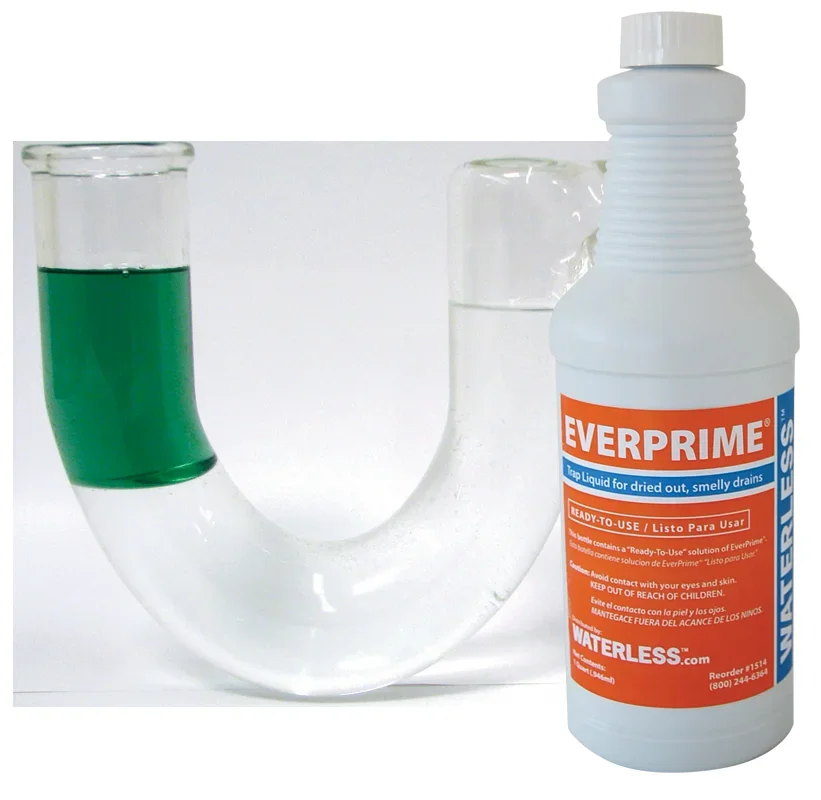
Beneath almost every commercial floor drain lies a U, P, or J-shaped plumbing pipe known as a trap.
The Mechanism: This trap is designed to hold a small amount of water (usually two to four inches).
The Barrier: This standing water creates a physical seal that blocks dangerous and smelly sewer gases from escaping up into the room.
The Evaporation Problem: When a restroom goes unused, this water evaporates. Without that liquid barrier, sewer gases flow freely into the facility.
During regular operations, routine mopping and facility washing naturally replenish this water. However, during extended breaks, holidays, or seasonal closures, the trap quickly dries out.
More Than Just a Bad Smell: A dry drain trap allows more than just foul odors into your facility. It can release hazardous gases like methane and hydrogen sulfide, alongside airborne bacteria, viruses, and mold. In fact, dry drain traps were famously linked to the spread of the SARS virus in a Hong Kong housing complex in 2003, proving that this minor plumbing detail can have major health implications.
How to Prevent Floor Drain Odors
Fortunately, keeping sewer gases where they belong is relatively straightforward. Facility managers generally choose from three primary methods:
Manual Replenishment: The most basic fix is having custodial staff manually pour water down every floor drain at least once a week. While inexpensive, it is labor-intensive and easily forgotten during long shutdowns.
Automated Priming Systems: Facilities can install trap primers that automatically inject water into the drains based on timed schedules or pressure drops. While effective, these systems carry high hardware and plumbing installation costs, which multiply quickly across large buildings.
Liquid Trap Seals (EverPrime): A highly cost-effective alternative is using a specialized barrier liquid like EverPrime. Adding just a few ounces to the drain creates a long-lasting cover that prevents water evaporation for months. It requires no plumbing modifications, works in all temperature extremes, and drastically reduces maintenance frequency.
Maintaining a Fresh Commercial Restroom
The best restroom experience is one that goes completely unnoticed. By proactively managing floor drains, facility managers can eliminate sewer odors, safeguard occupant health, and boost confidence in the building's cleanliness.
To learn more about optimizing public restroom odor control, reducing water consumption, or exploring waterless urinal technology, reach out to a Waterless Co. representative today.