Relentless heatwaves and expanding drought zones across the United States are presenting steep hurdles for the agricultural sector. As the 2026 growing season hits a crucial turning point, producers nationwide face dwindling irrigation reservoirs, stressed crops, and heightened wildfire dangers. These compounding environmental pressures threaten farm productivity, crop yields, and national food stability.
Why the Current Drought Is Devastating American Agriculture
While summer dry spells are expected, a unique combination of extreme weather factors is amplifying the severity of the 2026 drought.
Key Drivers of the Agricultural Strain:
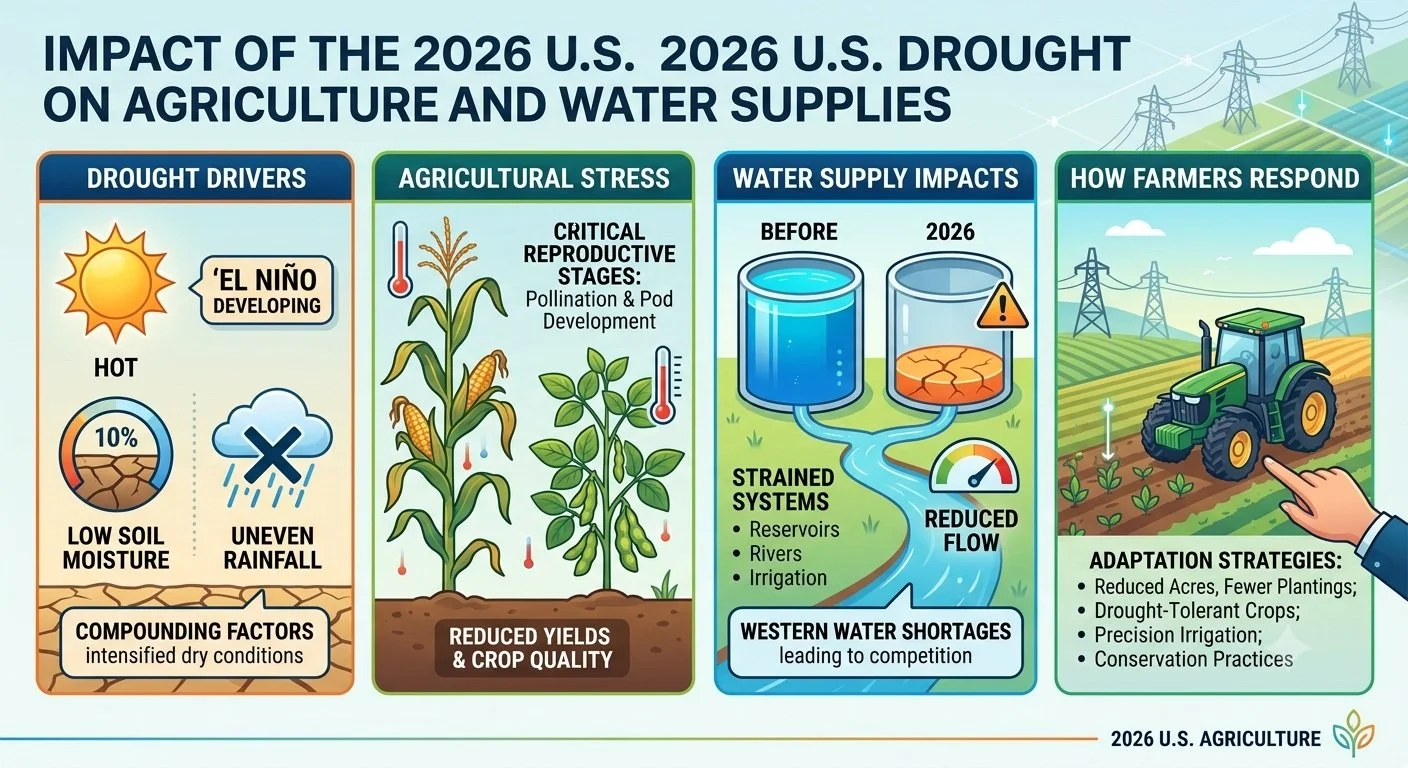
Compounding Climate Factors: A developing El Niño pattern paired with sustained high temperatures, low rainfall, and dry topsoil has intensified conditions in major farming hubs.
Timing with Critical Growth Phases: Mid-summer is vital for corn and soybean crops entering key reproductive stages—such as pollination and pod development. Heat stress now directly cuts into harvest volume.
Depleted Western Reservoirs: Prolonged dry spans across the West have left river basins and municipal water systems severely depleted, triggering strict allocations.
In regions like the Colorado River Basin, fierce competition over shrinking groundwater reserves is forcing a standoff between farm irrigation, urban expansion, and industrial development.
Direct Impacts on Farmers and Regional Farming Shifts
The agricultural sector is confronting both short-term operational hurdles and long-term structural shifts.
Immediate Operations: Reduced water allocations force row-crop producers, fruit growers, and nurseries to cut back planted acreage, stall farm expansions, or pivot toward drought-resistant crop varieties.
Geographic Shifts in Specialty Crops: States like California—long the leader in fruit, nut, and vegetable production—face ongoing water restrictions. This scenario creates potential opportunities for growers in wetter regions to fill supply shortages, provided they can establish necessary infrastructure and distribution channels.
The Rising Battle Over Water Rights
Groundwater and surface supply competition is no longer just a farm issue—it is a regional development conflict.
The Big Challenge: Agriculture is competing directly with high-water-demand industries, including solar farms, data centers, and expanding residential suburbs.
To safeguard the future of American agriculture, stakeholders are advocating for a two-pronged strategy:
1. Policy Reform: Smarter state-level growth policies, development limits in water-scarce zones, and updated infrastructure.
2. On-Farm Innovation: Widespread adoption of precision irrigation, drought-tolerant crop seeds, and cooperative water-sharing models.
Supply Chain Risks and Consumer Food Prices
Prolonged drought in major agricultural belts eventually impacts consumer wallets. Unfavorable late-season weather and strict irrigation cuts can drive up retail grocery prices and shrink store supplies. While the ultimate economic impact depends on late-summer rainfall, the 2026 crisis underscores water availability as the single most critical asset in food production.
How Urban and Suburban Communities Can Help Relief Efforts
Urban and suburban water use directly impacts the larger hydrological ecosystem. Conserving water isn't just about taking shorter showers—it’s about implementing long-term water efficiency to permanently reduce demand on municipal systems.
Simple, High-Impact Efficiency Upgrades:
Upgrade Household Fixtures: Install high-efficiency toilets rated at 1.28 gallons per flush (GPF) or lower to permanently slash residential use.
Modernize Commercial Facilities: Schools, offices, and commercial sites can transition to waterless urinals to eliminate thousands of gallons of daily waste.
By cutting municipal water demand at scale, off-farm communities can help ease the burden on regional reservoirs, preserving essential water supplies for the farms that feed the nation.