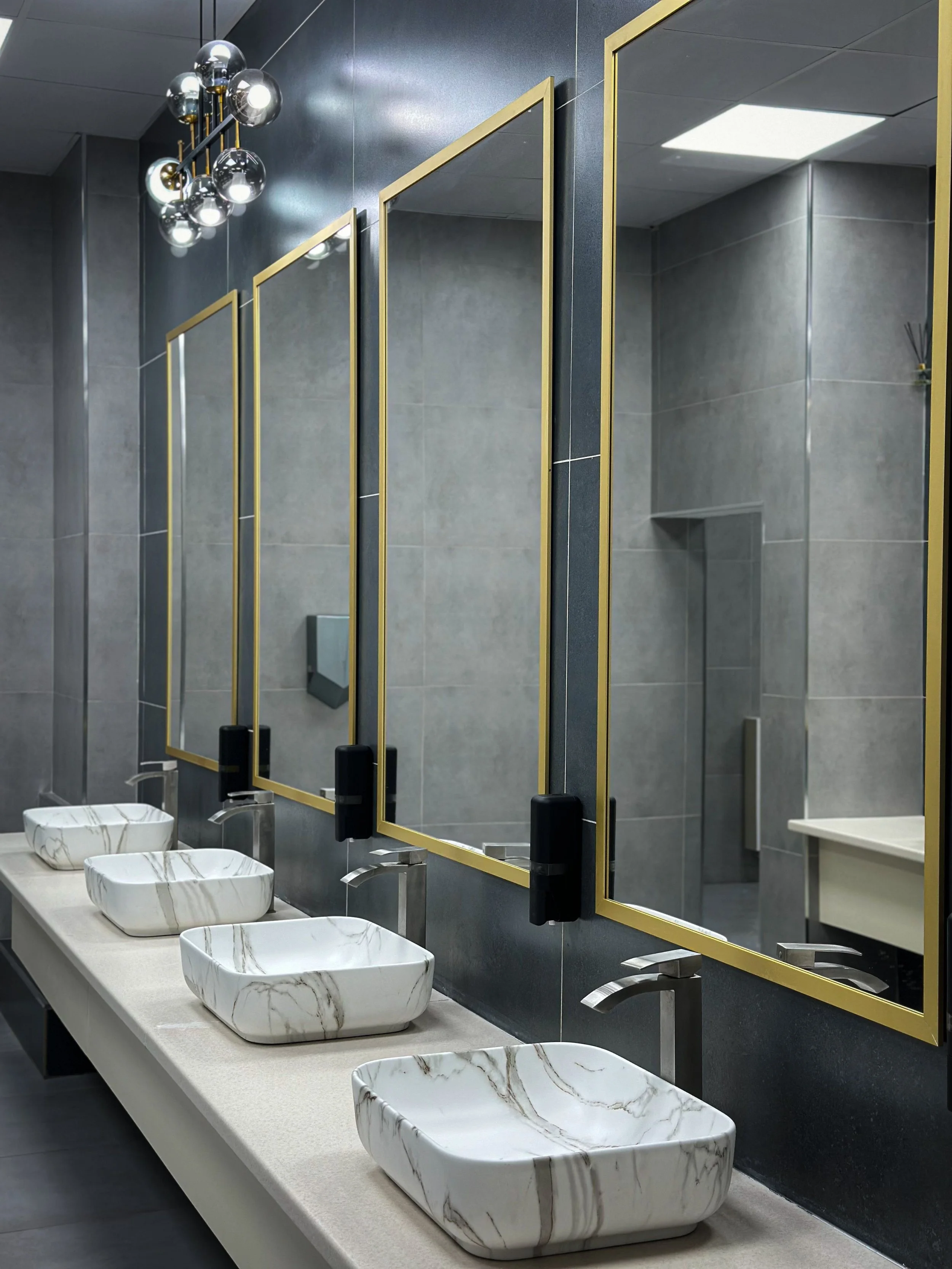
Found on Prexels
Today’s homeowners still view the primary bathroom as a personal sanctuary, but the definition of modern luxury is shifting. Rather than relying solely on lavish, spa-inspired aesthetics, homeowners are finding relaxation in functional, low-maintenance design. Practical comfort, seamless organization, and effort-free upkeep have officially become the new standards for luxury.
According to the 2026 U.S. Houzz Bathroom Trends Study, renovation decisions are overwhelmingly driven by daily usability. From expansive shower stalls and customizable lighting to built-in organization, practicality is dictating how homeowners invest their renovation budgets across all spend tiers.
Following these lifestyle-focused upgrades, homeowners consistently report spending significantly more time unwinding and practicing self-care. Interestingly, the study highlights a shift in what creates a peaceful atmosphere: most respondents cited cleanliness and order as the single most essential ingredient for a "Zen" environment, followed closely by open shower layouts, uncluttered storage solutions, layered illumination, and ergonomic soaking tubs.
1. The Rise of the Oversized Shower
Shower expansions saw a dramatic surge this year. Nearly half of renovating homeowners opted to enlarge their shower footprint, representing a 10% jump year-over-year. Alongside physical size increases, upgrades to shower fixtures and premium faucets also spiked. Expanding the shower footprint underscores a broader priority: generous, open spaces make daily routines feel less restrictive and far more rejuvenating.
2. Personalizing with Texture and Pattern Over Bold Colors
Bathrooms are evolving into warmer, more tailored spaces through intentional, personalized accents:
Top Architectural Styles: Transitional design remains the leading choice for bathroom renovations, followed by contemporary, modern, traditional, and mid-century modern.
Finishes & Palettes: Natural wood-toned vanities are currently the most sought-after choice, with classic white and muted blue following closely behind. White and off-white quartz or stone remain the dominant choices for countertops.
Accent Features: Over a third of homeowners are installing accent walls—frequently positioned as a dramatic backdrop for a standalone tub—to serve as the primary visual anchor.
Layout Dynamics: Instead of relying on bright paint colors, homeowners are introducing personality through dynamic tile patterns, such as herringbone, checkerboard, and geometric arrangements. Textural details like fluted and ribbed tiles are also rapidly gaining popularity.
3. The Growing Popularity of Wet Rooms
Fully integrated wet rooms (enclosing both the tub and shower within a unified glass barrier) now appear in 18% of bathroom remodels, up from 13% in recent years. This open-format layout provides several key benefits:
Space Optimization: By eliminating rigid internal walls, wet rooms allow homeowners to maximize usable square footage in compact or awkwardly shaped layouts without sacrificing a high-end feel.
Universal Design & Longevity: Enhanced accessibility and aging-in-place readiness were cited as primary motivators for choosing a wet room layout.
Simplified Maintenance: Continuous, waterproofed surfaces make deep cleaning faster and more straightforward.
4. Expanded Vanities and Built-in Convenience
Storage solutions have become a major focal point in modern bathroom design. To curb daily clutter, homeowners are installing larger vanities packed with functional, built-in features:
Integrated Utilities: Internal electrical outlets, dedicated hair-styling appliance docks, and custom drawer dividers are becoming standard additions.
Quiet Luxury: Soft-close mechanisms for cabinet doors and drawers remain high-demand baseline requirements.
Dual-User Functionality: Double-sink setups experienced a notable 17% increase in popularity over last year as couples prioritize efficiency during peak morning hours.
5. Eco-Conscious Innovations: The Arrival of Waterless Urinals
Another emerging trend, according to many other studies, is the addition of waterless urinals. Homeowners are adopting these fixtures primarily to curb household water consumption and reduce utility bills. Additional drivers include:
Targeted Convenience: Provides an efficient, dedicated fixture for high-traffic or primary bathrooms.
Improved Hygiene & Odor Control: The absence of standing flush water minimizes bacterial growth, limescale buildup, and odor accumulation, resulting in easier cleaning.
Environmental Sustainability: Lower overall water usage reduces the load placed on municipal wastewater treatment and septic systems.
Long-Term Utility Savings: Eliminating water supply lines to the fixture lowers installation complexity and cuts ongoing maintenance costs over time.
Additional Key Findings from the Study
Wellness & Atmosphere: Layered lighting setups lead the wellness category, with deep soaking tubs, rain shower heads, and radiant heated flooring also ranking high. Niche additions—like steam showers, integrated aromatherapy, and self-sterilizing surfaces—remain relatively boutique choices.
Smart Toilet Technology: Nearly half of renovators are incorporating enhanced toilet features, with bidet seats, customizable water pressure, and warm-air dryers seeing steady growth.
Accessibility Enhancements: For aging-in-place modifications, safety takes priority through discreet grab bars, slip-resistant surfaces, and low-curb or curbless shower entries.
-Klaus