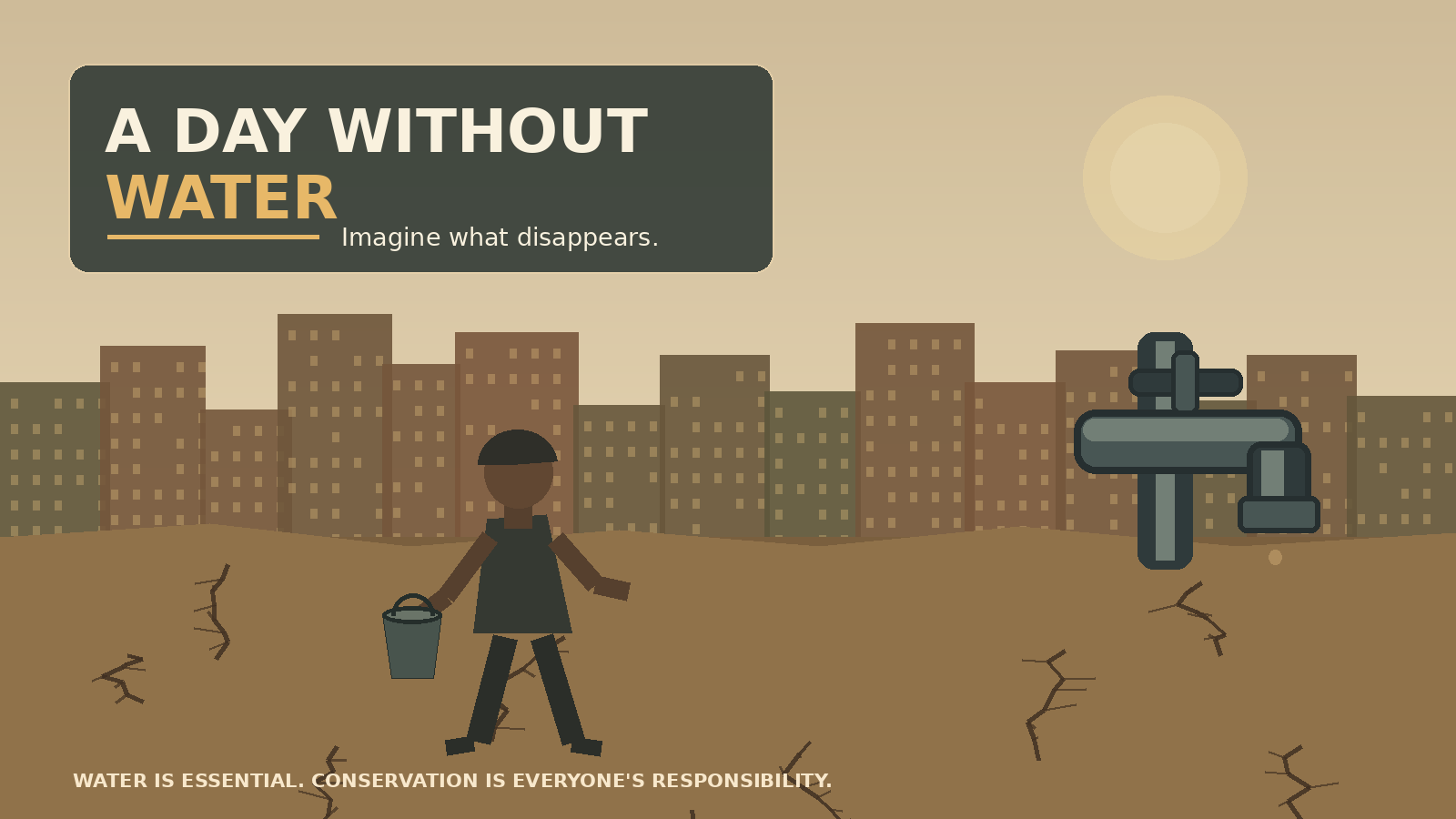
Imagine a Day Without Water
VISTA, Calif. — October 12, 2026 — What would happen if the United States went an entire day without water?
That fundamental question drives Imagine a Day Without Water, a national day of action returning on October 15, 2026. Spearheaded by the U.S. Water Alliance since 2015, the annual event unites businesses, local communities, public officials, and environmental organizations to raise awareness about water's vital role in daily life and highlight the urgent need for infrastructure investment, conservation, and smart technology.
"Imagine a Day Without Water gets people asking a fundamental question: What would it be like to go even a single day without water?" says Klaus Reichardt, Founder and CEO of Waterless Co., Inc., a pioneer in water-efficient restroom products.
"It is also a powerful educational tool, particularly for children, helping the next generation understand just how important water is to our daily lives."
The Stunning Economic Cost of Water Interruption
Beyond basic drinking and sanitation needs, water serves as the lifeblood of the global economy. A single day without water in the United States would trigger catastrophic financial fallout across virtually every industry sector.
According to research from the U.S. Water Alliance, a one-day national water shutdown would result in:
$120+ Billion in total economic losses
526,996 jobs placed at risk
$39.2 Billion in lost employee wages
$69 Billion reduction in national GDP
40%+ daily loss in economic output for water-dependent industries
"Water is essential not only for drinking and sanitation, but for virtually all industries and every sector of the economy," Reichardt highlights.
5 Practical Action Steps for Businesses and Communities
The Imagine a Day Without Water campaign encourages organizations and municipality leaders to move beyond passive awareness and take measurable action toward water resilience.
Here are five key ways commercial facilities and communities can participate:
1. Conduct Facility Water Audits: Organizations should evaluate how water is utilized across their operations. Professional audits detect hidden leaks, highlight inefficiencies, and uncover ways to drastically reduce—or eliminate—water usage.
2. Upgrade Commercial Restrooms: Facility managers can significantly lower utility costs and consumption by adopting smart water-management technologies, low-flow fixtures, and waterless urinals.
3. Issue Official Proclamations: Governors, mayors, and local leaders can formally recognize October 15 to inspire regional conservation campaigns among residents and enterprises.
4. Launch Public Education & Social Campaigns: Coffee shops, restaurants, schools, and corporate offices can post signage and share social media content demonstrating the water footprint of everyday activities.
5. Reward Sustainability Leaders: Establish internal employee or vendor awards to recognize innovative ideas that reduce organizational water consumption.
"Water audits should not be overlooked," Reichardt emphasizes. "They can identify inefficiencies and leaks and, most importantly, uncover opportunities to reduce water consumption—even eliminate water use entirely."
To learn more about participating in the national campaign, visit the U.S. Water Alliance website.
###
About Waterless Co., Inc.
Founded in 1991 and headquartered in Vista, California, Waterless Co., Inc. is a pioneer in water-efficient restroom products and developer of the first waterless urinals introduced to North America. The company provides innovative, water-saving restroom solutions that help commercial and institutional facilities lower operating costs, simplify maintenance, and advance environmental sustainability. Explore products and resources at Waterless.com.