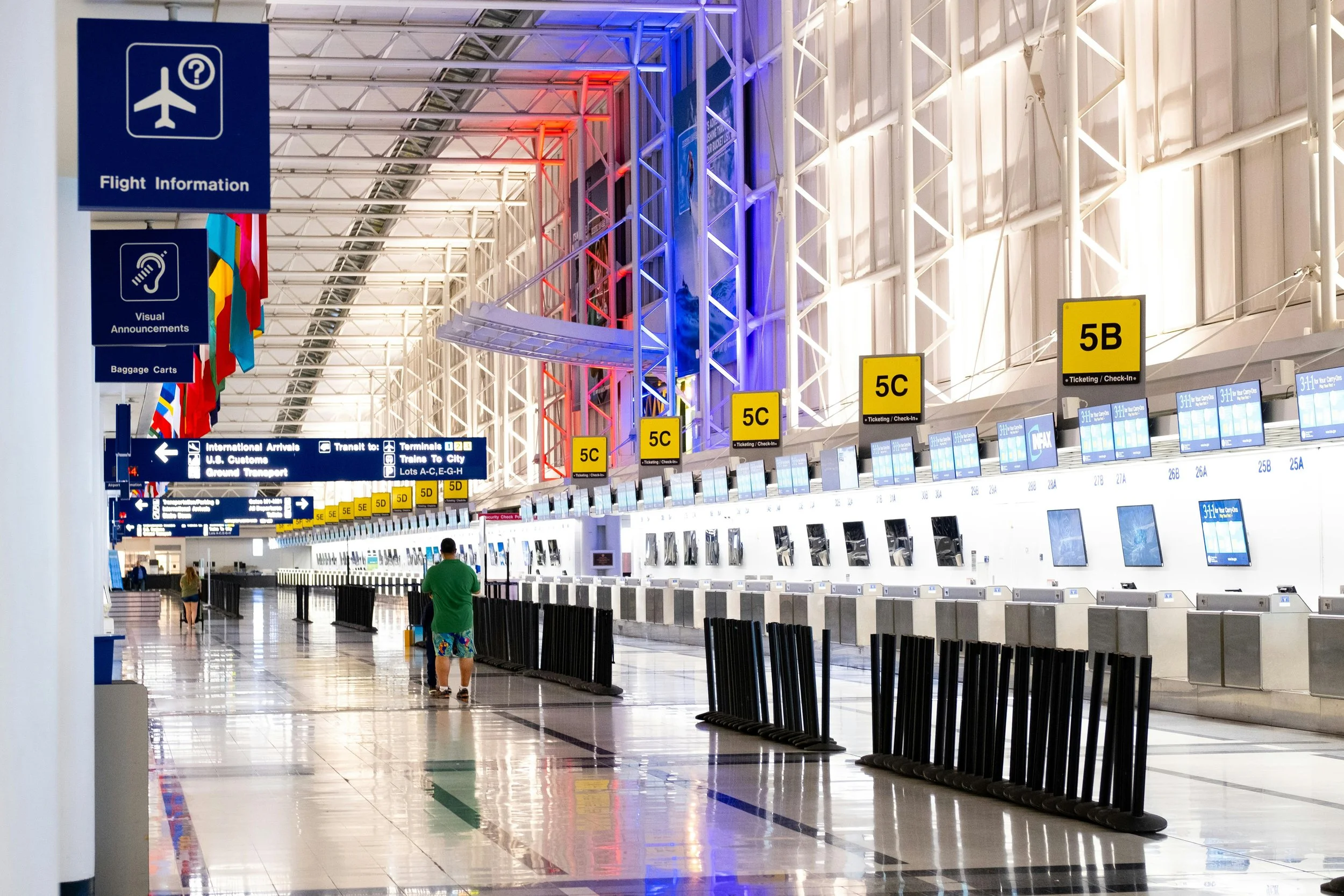
Image by Mathew Turner found on Prexels
Airports are mini cities that never sleep. With millions of passengers passing through terminals annually, the water footprint can be massive. However, according to insights from UK engineering experts at Hoare Lea, these sprawling hubs are uniquely positioned to lead the charge in water efficiency.
By rethinking everything from the restroom to the runway, airports can slash operating costs and meet ambitious sustainability goals. Here are six high-impact strategies transforming airport water management today.
1. High-Efficiency Fixtures
The easiest win for any terminal is at the tap. By installing low-flow toilets, sensor-activated faucets, and waterless urinals, airports can significantly reduce "direct use" water consumption. The best part? These upgrades are invisible to passengers, maintaining a premium user experience while quietly saving gallons behind the scenes.
2. The Power of Water Recycling
Why use drinking water to flush a toilet? Airports are increasingly turning to circular water economies by implementing:
Greywater Systems: Capturing water from sinks and showers for non-potable use.
Treated Wastewater: On-site plants that purify water for industrial tasks.
Reclaimed Water: Utilizing processed water for cooling towers and heavy maintenance.
3. Harvesting "Hidden" Water Sources
An airport’s massive physical footprint is a goldmine for water collection.
Rainwater Harvesting: Capturing runoff from vast terminal roofs and tarmacs.
HVAC Condensate: Reclaiming the "sweat" from massive air conditioning units.
Result: A steady supply of free water for landscaping and cooling systems.
4. Cooling & Mechanical Optimization
Cooling a glass-walled terminal in the summer takes a monumental amount of water. Airports are now optimizing their HVAC and cooling towers by:
Increasing water "cycling" (reusing the same water more times before discharge).
Exploring geothermal cooling to bypass water-heavy evaporation methods.
Integrating advanced heat exchangers that prioritize energy and water synergy.
5. Smart Monitoring & Leak Detection
You can’t manage what you don’t measure. Modern airports use IoT-enabled smart meters and automated leak detection to spot a burst pipe or a running toilet in real-time. This data-driven approach ensures that "ghost usage" is eliminated, keeping the system airtight and efficient.
6. Sustainable Landscaping (Xeriscaping)
Manicured green lawns are out; native biodiversity is in. By replacing thirsty grass with drought-tolerant plants and smart irrigation, airports can save millions of gallons annually. This not only saves water but also reduces maintenance costs and can even help manage local bird populations (a major safety plus for aviation).
The Bottom Line
Because airports operate on such a massive scale, even a 5% increase in efficiency can translate into millions of gallons saved. By combining smart tech, waterless urinals, with circular water systems, the aviation industry isn't just moving people, it's moving toward a more sustainable future.
-Klaus
Read the entire article here: Innovative water conservation takes flight. | Hoare Lea