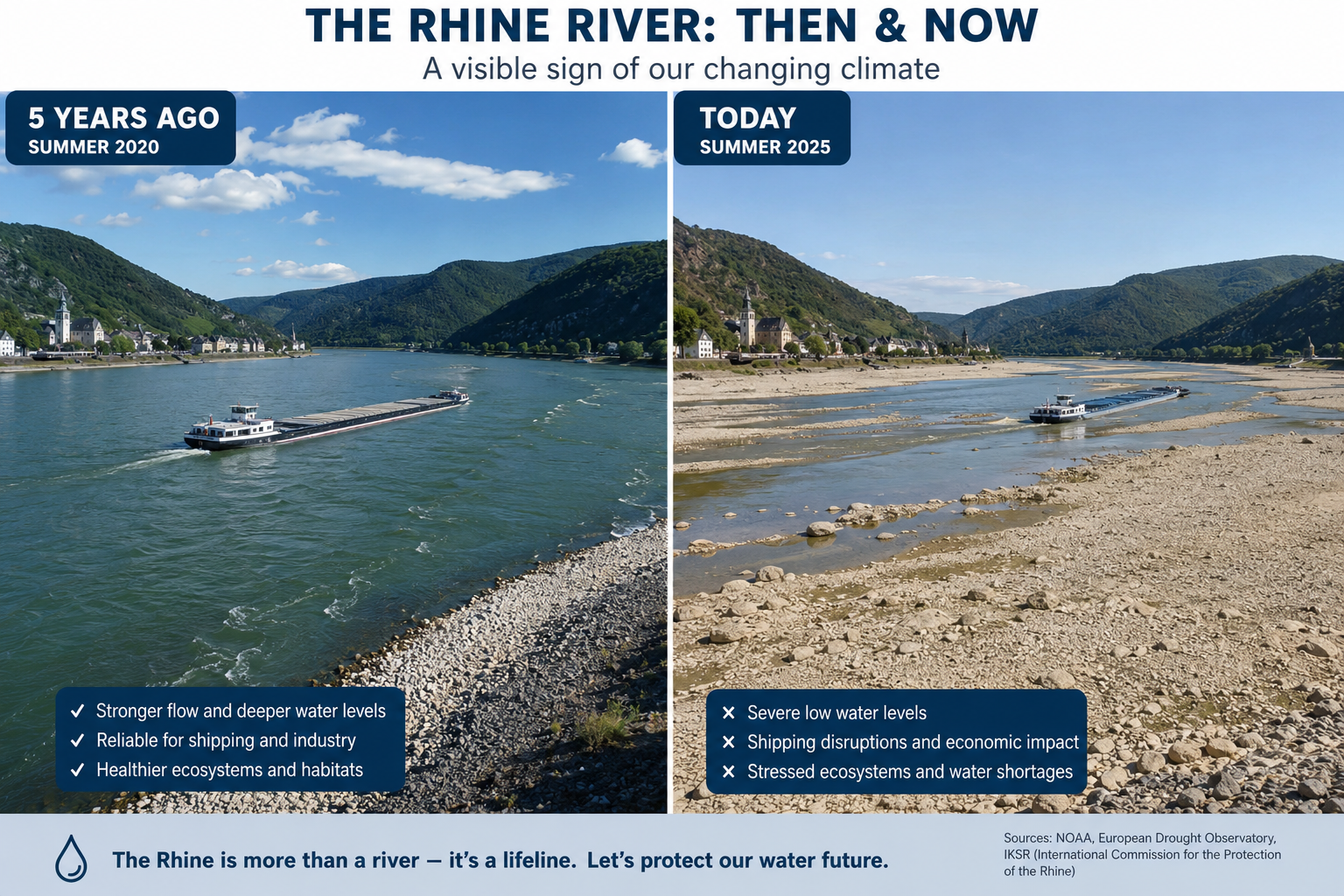
The Rhine River in Germany is much lower and drier today than it was five years ago. In 2021, heavy rain caused high water and near-flooding in some areas. Now, long dry periods, warmer weather, and less Alpine snowmelt have pushed parts of the river to record-low levels.
What Has Changed
· Water levels: In 2021, heavy rainfall raised the river and caused near-flooding in parts of the Rhine basin. Today, the river is much lower because of extended dry weather, warm springs, and reduced snowmelt from the Alps. At important shipping points such as Kaub, water levels have dropped to extremely low measurements.
· River flow: The amount of water moving through the river has also fallen sharply. At major measuring points, summer flow is far below normal and has reached new record lows.
· Exposed riverbeds: Places that were covered by water five years ago now show sandbanks, gravel bars, and dry sections of riverbed, especially near areas such as Boppard and Kaub.
Why It Matters
· Shipping limits: In 2021, cargo ships could usually carry normal loads. Today, many barges must carry only a small share of their usual cargo—or stop operating—because the water is too shallow.
· Business impact: Low water makes it harder and more expensive to move goods. This affects industries along the Rhine, including chemical, steel, and energy companies, and can force shipments onto rail or road instead.