
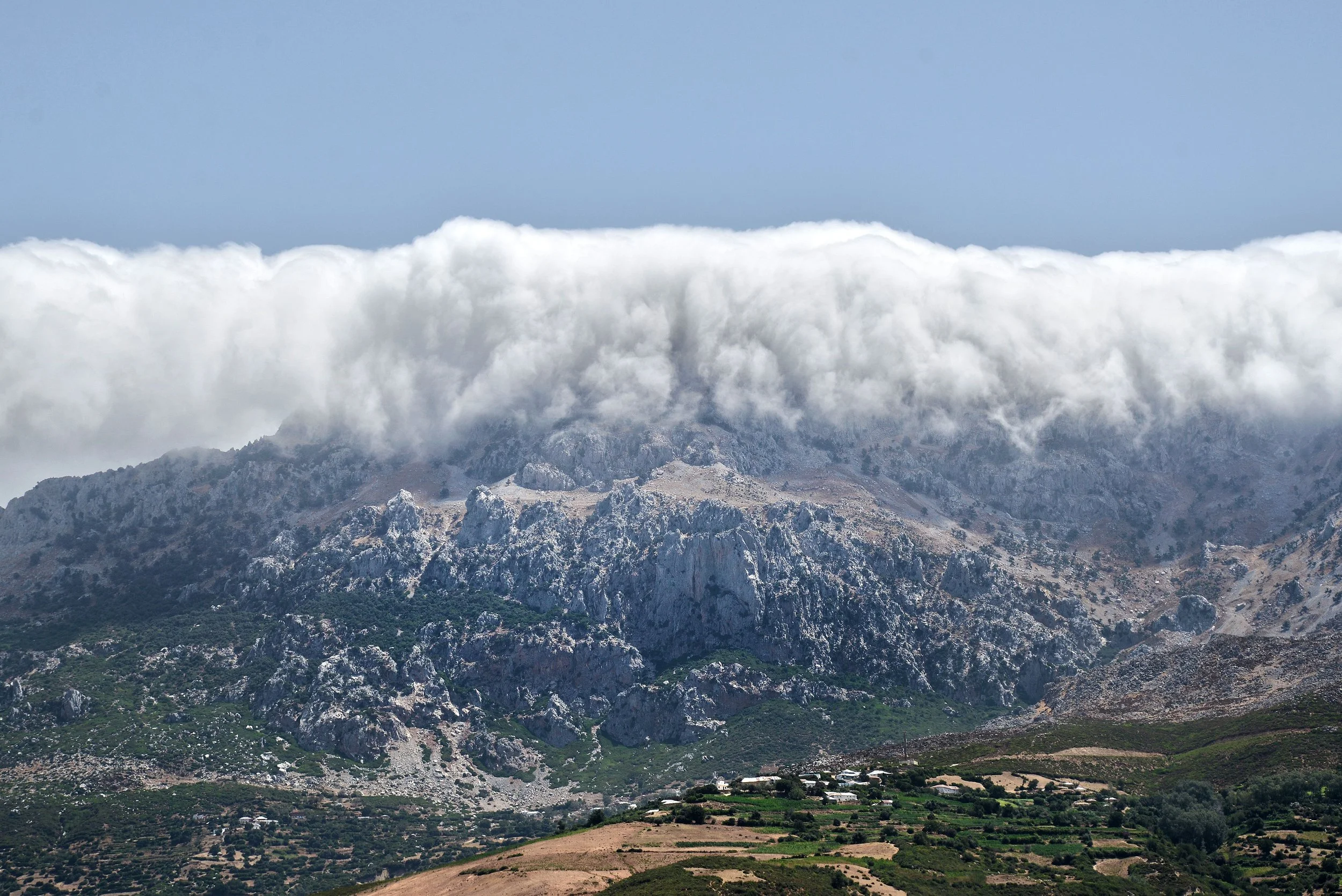
Image found on Prexels
As drought grips the American West year after year, snowpacks continue to thin, and water agencies face mounting supply pressure, a once-fringe technology is getting a serious second look: cloud seeding.
What used to sound like science fiction is now a genuine line item in many water managers' toolkits. But how much can it actually deliver?
What Cloud Seeding Actually Does
Cloud seeding isn't magic — it can't summon rain from a clear sky. It works only with clouds that are already there, giving them a nudge to produce more precipitation than they would on their own.
Here's the basic process:
Delivery: Planes or ground-based generators release fine particles — typically silver iodide — into promising clouds.
Why it works: Those particles act as seeds for ice crystals, which then grow heavy enough to fall as rain or snow.
Where the tech stands today: The practice dates back to the 1940s in the U.S., but it's now guided by radar tracking, atmospheric models, and live sensor data to zero in on the clouds most likely to respond.
Just How Effective Is It?
According to a review by the Government Accountability Office (GAO), seeding can boost precipitation somewhere in the range of 0% to 20% — a wide window that depends heavily on the conditions in play.
Two things make the technology hard to evaluate:
1. No clouds, no seeding. The right temperature, moisture, and wind conditions have to already exist — this only amplifies storms, it doesn't create them.
2. Hard to isolate the effect. Telling the difference between precipitation caused by seeding and precipitation that would have fallen anyway is genuinely difficult, which is why the GAO says solid long-term data is still thin.
Who's Using It, What It Costs, and Is It Safe
Weather modification is gaining traction, but not without pushback:
State-by-state split: Nine or more Western states currently fund seeding programs, while others have moved to limit or ban the practice outright.
Safety picture: GAO findings suggest current silver iodide levels aren't a meaningful risk to people or ecosystems — though what happens if these programs scale up significantly hasn't been well studied.
Cloud Seeding Isn't a Substitute for Water Efficiency
Seeding won't solve drought or climate change on its own — it's a supplement, not a cure, and its role is limited to boosting snowpack when conditions allow.
Water efficiency works differently: it permanently lowers demand, through measures like waterless urinals or water-conserving HVAC systems, rather than trying to increase supply.
Bottom Line
Cloud seeding can help storms produce a bit more moisture than they would naturally, but it's no replacement for the fundamentals — protecting groundwater, maintaining reservoirs, repairing aging infrastructure, and improving agricultural water use. The West's water future depends on pairing supply-side tools like cloud seeding with real demand-side conservation.