Public restrooms have become a flashpoint for scrutiny at parks and recreation facilities, a trend that only intensified after COVID-19. And nobody notices a grimy restroom faster than parents, who make up a significant chunk of the people walking through park gates.
The trouble is that renovation projects tend to get shelved indefinitely, since a true overhaul isn't cheap — tearing out flooring, walls, fixtures, and lighting, then rebuilding, often while also meeting ADA requirements that can force an architect to rethink the entire layout.
Even so, few investments pay off the way a restroom renovation does. Beyond the obvious — happier staff and a better first impression for visitors — modern, water-efficient fixtures are simpler to maintain and trim both water and electricity bills, a meaningful win for facilities funded by taxpayers.
Fewer complaints and more compliments tend to follow. One mother in Maryland summed it up well: restroom conditions are often the deciding factor in which park she picks for her kids.
Affordable Ways to Upgrade Park Restrooms
Automatic sanitizing systems — These release disinfectant with every toilet or urinal flush, keeping odors down and reducing how often staff need to clean high-traffic restrooms. Interest in this technology has climbed sharply since the pandemic.
Touch-free toilet-seat cleaning — A hand wave triggers automatic disinfecting and drying, eliminating contact entirely. This is a natural fit for restrooms that see constant use throughout the day.
Touch-free fixtures and dispensers — Hands-free soap and paper towel dispensers limit cross-contamination and can be set to dispense controlled amounts, which cuts down on supply waste and cost over time.
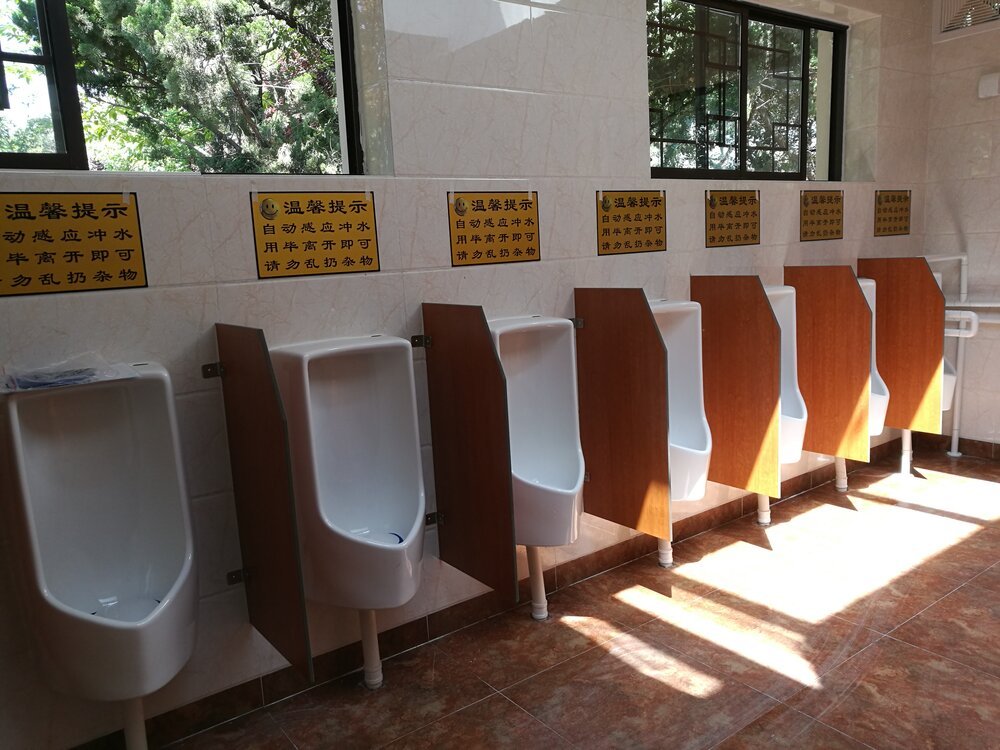
Waterless urinals — More parks and rec departments are switching to no-water urinal systems because they're odor-free, hygienic, and less costly to install — there's no flush valve or extra plumbing required. The water savings alone can make a noticeable dent in a facility's budget.
Plastic partitions — Compared to metal, plastic partitions are lighter, simpler to wipe down, and hold up better against graffiti and vandalism, both persistent headaches in public park restrooms.
Seamless epoxy flooring — Swapping out tile and grout for epoxy solves the sanitation problems that come with grout lines, while also improving waterproofing, drainage, and long-term durability in busy restrooms.
Looking Ahead: Water Efficiency and Code Compliance
With water rates only trending upward, installing efficient fixtures now sets park districts and municipalities up for long-term savings. It's also worth looping in architects and contractors who track upcoming building code changes — getting ahead of future requirements now avoids expensive retrofits down the line. For any facility weighing the upfront investment, a well-planned restroom upgrade remains a financially sound, sustainable choice.
Klaus Reichardt is CEO and founder of Waterless Co., Inc., based in Vista, Calif. He started the company in 1991 to bring water-efficient solutions to the plumbing fixture industry and regularly writes and speaks on water conservation. He can be reached at klaus@waterless.com.