1. Deteriorating Networks
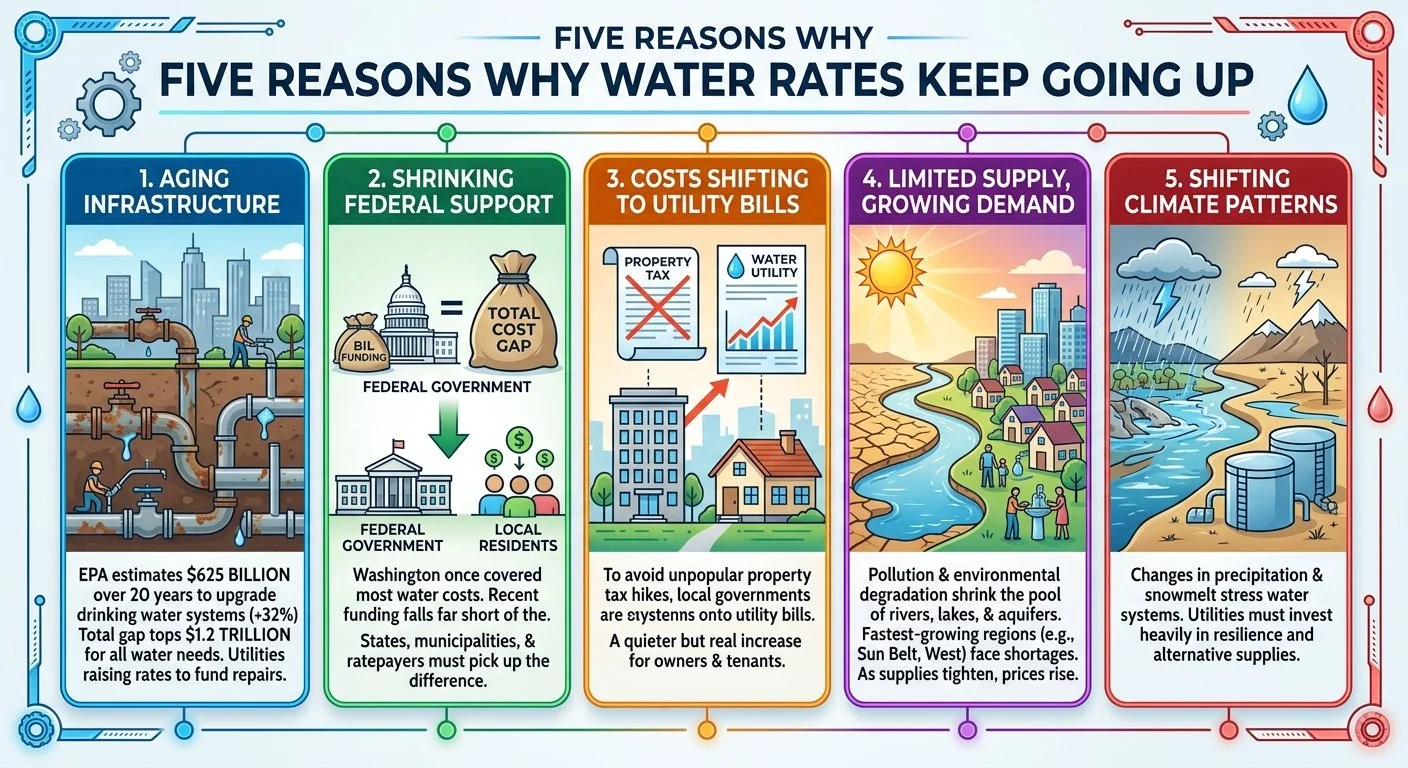
America's water systems are severely outdated. Upgrading the nation's drinking water networks requires over $625 billion over two decades, and including wastewater and stormwater infrastructure pushes total needed investment beyond $1.2 trillion. To fund these vital restorations, municipalities have no choice but to adjust tariffs upward.
2. Declining Federal Subsidies
While national government grants once financed the majority of water project developments, federal assistance has sharply decreased. Modern programs—even recent infrastructure bills—cover only a fraction of municipal needs, transferring the financial burden directly to local residents and ratepayers.
3. Hidden Tax Shifting
To avoid public pushback from raising property taxes, many local authorities are transferring general public works expenses into water bills instead. This administrative shift acts as a surreptitious price hike for commercial property managers and residential tenants alike.
4. Depleted Reserves Meet Expanding Populations
Environmental contamination continues to pollute freshwater sources, reducing usable reservoirs and aquifers. Concurrently, rapid population growth in arid regions—such as the Sun Belt and American West—amplifies demand for increasingly scarce resources, driving prices higher.
5. Climate Instability
Erratic weather, unpredictable snowpacks, and frequent droughts strain municipal supplies. To guarantee long-term stability, water suppliers are forced to invest heavily in climate-resilient infrastructure and alternative sourcing projects.
The Practical Solution: Water Conservation & Efficiency To counteract these relentless price hikes, the most immediate line of defense is water efficiency—optimizing how we use water so that performance remains uncompromised while waste is minimized.
In practice, water efficiency means right-sizing consumption for every application, or eliminating freshwater usage entirely where alternative technology exists.
For example, installing waterless urinals completely removes fresh water from the liquid waste disposal process, drastically cutting utility expenses without sacrificing functionality. completely removes fresh water from the liquid waste disposal process, drastically cutting utility expenses without sacrificing functionality.