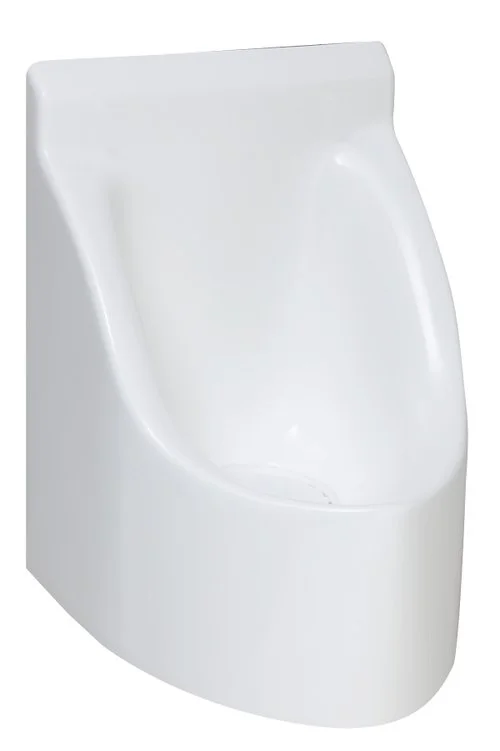
Waterless urinals help commercial and institutional facilities reduce potable-water use, lower water and sewer costs, and eliminate many flush-related repairs. For facility managers comparing restroom upgrades, this guide explains how waterless urinals work, how much water they can save, what they cost to maintain, and how to prevent odor and drainage problems.
Unlike conventional urinals, which use water with every flush, waterless urinals route urine directly to the sanitary drain through a cartridge, membrane, or liquid-seal trap that blocks sewer gases. Eliminating the flush cycle saves water and reduces the number of valves, sensors, batteries, and other moving parts that may require service.
How Much Water do Waterless Urinals Save?
Conventional commercial urinals may use roughly 0.125 to 1.0 gallon per flush in modern installations, while older fixtures can use substantially more. Actual annual consumption depends on flush volume, traffic patterns, operating hours, fixture condition, and whether sensors trigger unnecessary “double flushes.”
Annual water use = number of urinals × uses per urinal per day × gallons per flush × operating days per year.
· Number of urinals.
· Number of uses per day.
· Number of gallons per flush.
· Number of operating days per year.
For example, let’s say your facility has:
· 20 urinals
· 60 uses per urinal per day
· 1 gallon per flush
· 250 operating days per year
With this information, the formula is simple:
20 × 60 × 1 × 250 = 300,000 gallons of water used per year.
Replacing those fixtures with waterless urinals could eliminate up to 300,000 gallons of flush water annually.
For facility managers, the benefits can extend beyond water savings:
Reduced potable-water consumption
Lower water and sewer charges
Less demand on local water and wastewater infrastructure
Progress toward internal ESG, water-efficiency, and sustainability goals
Potential alignment with green-building strategies, including LEED water-efficiency considerations
Lower Installation Costs
During new construction or a major restroom renovation, waterless urinals may reduce the need for flush valves, water-supply piping, electronic sensors, and associated electrical work. This can simplify plumbing scope and reduce the number of components that must be installed, commissioned, and maintained.
Retrofit economics vary. A facility should compare the cost of removing or capping water supply lines, upgrading drainage where needed, purchasing fixtures, and training staff against projected water, sewer, and maintenance savings.
Fewer Flush-Related Failures
Traditional sensor-operated urinals can require ongoing attention because they depend on multiple components, including batteries, solenoids, diaphragms, sensors, vacuum breakers, and flush valves. Failed components may lead to leaks, continuous flushing, missed flushes, overflow risks, or service calls.
Waterless urinals remove the flush mechanism entirely. That does not mean they are maintenance-free, but it does remove a common category of restroom repairs.
Predictable Maintenance Costs
Waterless urinals from Waterless Co., Inc (www.waterless.com) use a replaceable cartridge filled with a liquid sealant. These components must be maintained according to the manufacturer’s instructions and the fixture’s usage level.
A well-managed program usually includes:
Scheduled inspection of drainage performance
Cartridge or sealant replacement based on actual traffic
Use of approved cleaning products
Periodic drain-line maintenance where local water chemistry or usage conditions warrant it
Documentation of service dates and replacement intervals
The key is to treat cartridges and sealant as planned consumables rather than as an unexpected maintenance cost.
Are Waterless Urinals Hygienic?
Yes, but just like with conventional urinals, this is true when they are correctly installed, cleaned, and maintained. Waterless urinals are designed to direct urine into the sanitary drain while a cartridge, membrane, or sealing liquid helps prevent sewer gases from entering the restroom.
However, hygiene outcomes depend heavily on operations. Poor cleaning practices, incompatible chemicals, neglected cartridges, or improper drain maintenance can create odor and drainage problems in any restroom fixture system.
How Waterless Urinals Control Odors
The claim that waterless urinals automatically smell worse than flushing models is a common misconception. Odor complaints are more often connected to improper maintenance, an expired cartridge or depleted sealant, blocked drains, poor ventilation, or cleaners that damage the system’s sealing mechanism.
A properly maintained waterless urinal helps control odors by maintaining a barrier between the restroom and the drain system. Facility teams should follow the specific manufacturer’s cleaning and service instructions, since cartridge design and approved products differ by model.
Reduced Splash and Flush Aerosols
Because waterless urinals do not flush, they avoid the splash and aerosolization associated with a conventional flush cycle. This can reduce the spread of droplets around the fixture area and may make restroom cleaning more manageable.
That said, waterless urinals are not a substitute for standard restroom hygiene practices. Facilities should continue regular cleaning and disinfection of high-touch surfaces, floors, partitions, door handles, and nearby dispensers.
Drain-Line Considerations
Urine scale and mineral buildup can affect both waterless and conventional urinal drain systems. In waterless installations, facilities should use manufacturer-approved drain-line treatments and establish preventive maintenance procedures suited to traffic levels, pipe conditions, and local water chemistry.
Avoid pouring large amounts of water, bleach, or harsh acidic or alkaline products into waterless urinals unless the manufacturer specifically permits them. Incorrect products can compromise cartridges, sealants, and drain performance.
Waterless Urinal Maintenance Best Practices
Successful waterless urinal programs depend on staff training and a clear maintenance plan.
1. Train custodial teams on approved procedures. Use neutral-pH or manufacturer-approved cleaners, clean the fixture daily, and avoid products that can degrade the cartridge or liquid seal.
2. Track cartridge or sealant replacement intervals. Base the schedule on restroom traffic, manufacturer guidance, and observed drainage performance—not only on a fixed calendar date.
3. Inspect fixtures before odor complaints arise. During routine checks, look for slow drainage, depleted sealant, damaged cartridges, debris, improper use, or evidence of drain-line buildup.
4. Use clear restroom signage where appropriate. Brief signage can help explain that the fixture does not flush and discourage users from depositing paper towels, gum, trash, or other debris in the bowl.
5. Plan for drain maintenance. Include urinal drain lines in the facility’s preventive-maintenance program, particularly in high-traffic restrooms or older buildings with a history of scale buildup.
6. Measure results after installation. Compare water bills, sewer charges, maintenance work orders, cartridge usage, odor complaints, and restroom-service labor before and after the retrofit.
Waterless Urinals and LEED Water-Efficiency Goals
Waterless urinals can support a broader water-efficiency strategy, especially when paired with low-flow toilets, sensor optimization, leak detection, submetering, aerators, efficient irrigation, and occupant education.
For projects pursuing LEED certification or other sustainability frameworks, verify the current rating-system requirements and calculation methodology before claiming points. Waterless fixtures may contribute to indoor water-use reduction calculations, but project eligibility depends on the specific LEED version, building type, baseline assumptions, and documentation requirements.
Frequently Asked Questions About Waterless Urinals
Do waterless urinals smell?
Properly installed and maintained waterless urinals should not produce persistent odors. Odor problems usually point to an expired cartridge, depleted sealant, incompatible cleaner, blocked drain, or ventilation issue.
How often do cartridges need to be replaced?
Replacement frequency depends on the fixture model, restroom traffic, cleaning practices, and manufacturer guidance. Facilities should track actual use and drainage performance rather than rely only on a fixed calendar interval.
Can waterless urinals be installed in an existing restroom?
Often, yes. Retrofit requirements vary by fixture, drainage conditions, local plumbing rules, and the work needed to remove or cap the existing water supply. A site assessment is essential before estimating project cost and savings.
Is a Waterless Urinal Right for Your Facility?
Waterless urinals can be a strong facility-management choice for organizations seeking to reduce restroom water use, lower sewer charges, and avoid flush-valve maintenance. The best evaluation compares the full lifecycle cost: fixture and installation expense, projected water and sewer savings, cartridge or sealant costs, custodial training, cleaning procedures, and preventive drain maintenance.
High-traffic commercial buildings, schools, stadiums, airports, industrial sites, and public venues may see the greatest savings. Before selecting a system, calculate current urinal water use, confirm local plumbing requirements, inspect drain conditions, compare manufacturer maintenance requirements, and establish performance measures for water consumption, service calls, consumables, and odor complaints.