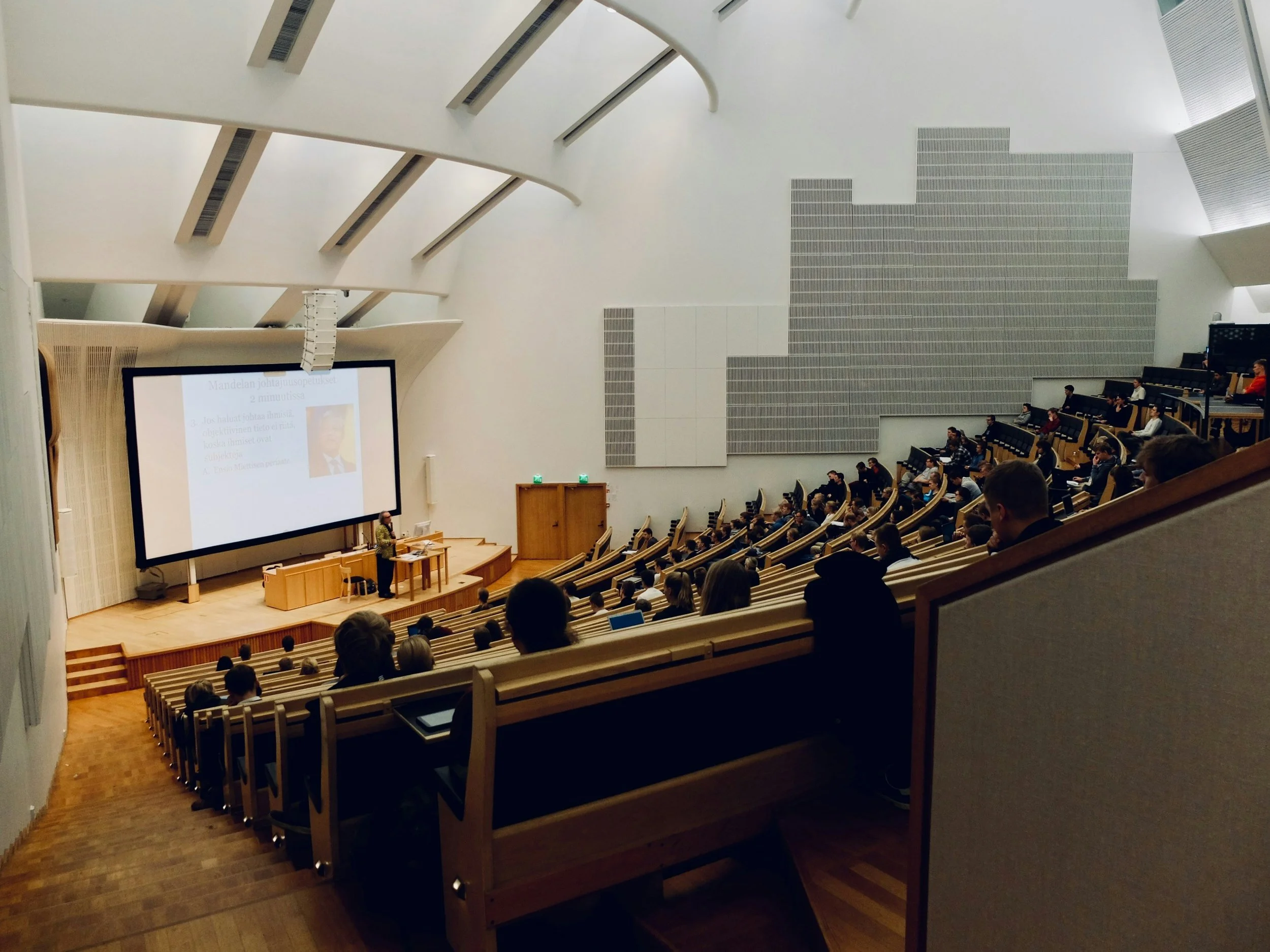
Image Found on Unsplash
Educational institutions face a continuing challenge: delivering quality educational experiences while managing increasingly complex operating budgets. From staffing and technology to building maintenance and utilities, administrators must make difficult decisions about where to spend and where to save.
One expense that deserves greater attention is water.
Schools, colleges, and universities consume substantial amounts of water every day. Restrooms, cafeterias, athletic facilities, laboratories, landscaping, and building operations all contribute to campus water use. While water is essential to these activities, not all consumption is necessary.
Identifying ways to use water more efficiently can help educational institutions control operating expenses, reduce waste, and make their facilities more sustainable.
In today's financial environment, water efficiency should be considered an operational investment rather than simply an environmental initiative.
Water and Wastewater Costs Are Putting Pressure on Budgets
For years, water was often viewed as a relatively inexpensive utility. That perception is changing as communities invest in aging infrastructure, upgrade treatment facilities, and address growing demands on available water supplies.
Recent research illustrates the financial impact. Bluefield Research reported that combined U.S. household water and sewer bills increased 5.1% in 2025, with a cumulative increase of 24.2% over five years. Water rates rose 6.0% during 2025, while wastewater rates increased 4.8%.
These figures reflect residential bills rather than commercial or institutional rates, which vary by location. Nevertheless, they demonstrate the broader cost pressures affecting water and wastewater services.
For educational institutions with multiple buildings and extensive facilities, even modest increases in utility rates can translate into meaningful additional expenses.
Wastewater costs are especially important. In many communities, sewer charges are calculated partly or entirely according to water consumption. This means that reducing unnecessary water use may lower both the water purchased and the wastewater charges associated with it.
The financial opportunity is worth examining, particularly for institutions managing large campuses and high-traffic buildings.
Start by Understanding Campus Water Consumption
Before investing in new equipment or changing operating procedures, administrators need a clear picture of how water is being used.
A review of utility bills over the previous two or three years can establish a useful starting point. Look for unusual increases, seasonal fluctuations, and differences in consumption among individual buildings.
Water-use audits can provide a more detailed assessment. These evaluations may identify leaking plumbing, inefficient fixtures, excessive irrigation, and equipment that consumes more water than necessary.
Benchmarking is another useful tool. The Environmental Protection Agency's WaterSense program offers commercial building water-use resources, including guidance for colleges and universities. Comparing consumption with relevant building benchmarks can help facility managers determine whether their facilities are operating efficiently.
Once problem areas are identified, administrators can establish priorities based on potential savings, implementation costs, and the expected useful life of improvements.
Three Areas Worth Examining
A campus-wide water-efficiency strategy does not necessarily require a major construction project. Many improvements involve existing facilities and everyday operations.
1. Landscaping and Irrigation
Outdoor water consumption can be substantial at institutions with extensive grounds, athletic fields, gardens, and landscaped walkways.
Traditional irrigation practices may result in considerable waste, particularly when systems operate on fixed schedules regardless of weather conditions.
Several improvements can make a difference:
Replace water-intensive plants with native or climate-adapted vegetation.
Evaluate opportunities to reduce irrigated lawn areas.
Install smart irrigation controllers that adjust watering according to weather and soil conditions.
Inspect sprinkler heads and irrigation lines for leaks and inefficient coverage.
Water during appropriate hours to minimize evaporation.
Over time, these changes can reduce irrigation requirements while lowering maintenance and utility expenses.
2. Restroom Fixtures and Plumbing
Restrooms represent another opportunity, particularly on campuses where hundreds or thousands of students, faculty members, employees, and visitors use facilities daily.
Older toilets, urinals, faucets, and showerheads may consume considerably more water than modern, efficient alternatives.
Replacing outdated fixtures with water-saving models can produce recurring reductions in water consumption. The greatest opportunities often occur in buildings with high occupancy and frequent restroom use.
Waterless urinals are another option worth evaluating.
Unlike conventional urinals, waterless models require no flushing water. This eliminates the water used for flushing and the associated wastewater volume.
They also do not require conventional flush valves, handles, sensors, or electrical connections for flushing. Depending on the installation, eliminating these components can simplify certain maintenance requirements and reduce replacement expenses.
For a school or university with numerous restroom facilities, the cumulative water savings can be considerable.
For example, an institution with 50 waterless urinals could potentially avoid approximately 1.3 million gallons of water consumption annually, using an illustrative estimate of 26,000 gallons saved per fixture per year. Actual savings will depend on restroom traffic, the previous fixtures' flush volumes, and usage patterns.
3. Kitchens, Athletic Facilities, and Other Operations
Restrooms and landscaping are not the only places to look.
Campus dining facilities, commercial kitchens, swimming pools, athletic facilities, laboratories, and maintenance operations can all contribute to substantial water consumption.
Administrators should examine equipment efficiency, cleaning procedures, water reuse opportunities where appropriate, and maintenance practices.
Leak detection also deserves attention. A small, unnoticed leak can waste significant quantities of water over time, particularly in buildings with older plumbing systems.
Regular inspections and more consistent monitoring can help identify problems before they become expensive repairs.
The Financial Benefits Extend Beyond Utility Bills
Reducing water consumption can produce benefits that go beyond lower monthly utility expenses.
For example, replacing outdated plumbing fixtures may reduce maintenance requirements and the frequency of component replacement. Improving irrigation efficiency may lower landscaping expenses. Identifying leaks early can help prevent property damage and costly repairs.
There is also a long-term planning benefit. Institutions that understand their water consumption and monitor utility expenses are better equipped to anticipate future operating costs and prioritize capital improvements.
These considerations are particularly important for private schools and colleges, where financial resources must be carefully allocated among educational programs, staffing, facilities, and student services.
Water efficiency also supports institutional sustainability objectives. Students, parents, faculty, and prospective employees increasingly look at how organizations manage their environmental responsibilities.
Demonstrating measurable improvements in resource management can strengthen an institution's sustainability efforts and provide meaningful opportunities for student engagement and education.
Make Water Efficiency Part of the Financial Strategy
Water conservation is sometimes treated as a temporary response to droughts or water restrictions. A more effective approach is to make water efficiency an ongoing part of facility management.
Educational institutions can begin by reviewing utility expenses, identifying the largest sources of consumption, and prioritizing improvements that offer measurable financial and operational benefits.
Not every project requires a substantial investment. Some improvements may involve adjusting irrigation schedules, repairing leaks, or changing maintenance procedures. Others, such as replacing older plumbing fixtures, may require capital expenditures but deliver savings over many years.
The important consideration is to evaluate each opportunity based on its total cost, expected water savings, maintenance implications, and payback period.
Water is an essential resource, but using more of it than necessary does not make a school or university more effective.
By treating water efficiency as a financial and operational priority, educational institutions can reduce avoidable expenses, improve facility performance, and make better use of resources.
-Klaus