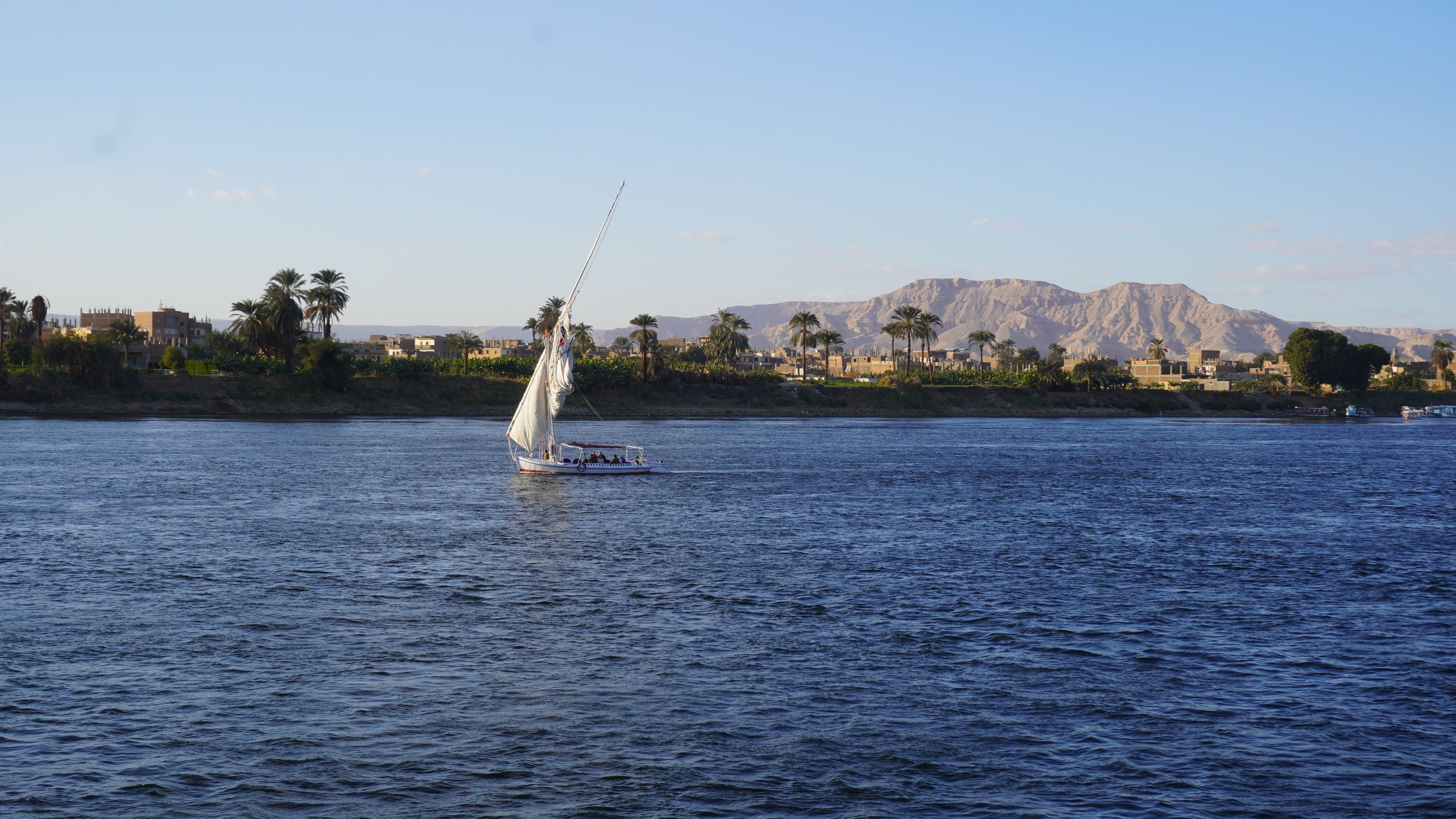
Image by INDU BIKASH SARKER found on Prexels
It remains striking that after thousands of years, Egypt still depends overwhelmingly on the Nile River for its freshwater. Today, the Nile supplies over 90% of the country’s renewable water resources, making Egypt one of the most Nile-dependent nations on Earth.
While Egypt utilizes underground water, it has historically represented a small share of total consumption. As of the late 2010s, only about 7% of Egypt’s water came from aquifers. While that figure has increased slightly in recent years, groundwater remains a supplemental—not primary—resource. However, Egyptian officials recognize that underground reserves must play a larger role as the population grows and water demand rises.
To map these vital resources, researchers from the University of Delaware were invited to assess Egypt’s groundwater reserves. The goal was to determine how much water lies beneath the surface, how old it is, and how much can be safely pumped for agriculture and human use.
The findings were surprising.
The Discovery of Ancient Egyptian Aquifers
Using advanced isotope-dating techniques, researchers discovered that much of Egypt’s underground water is extremely old—dating back up to 200,000 years.
Scientists originally expected to find "younger" water (50 to 100 years old) replenished recently by rainfall or modern irrigation. Instead, they uncovered a complex mix of ancient, slowly recharged water alongside younger water in specific regions.
The study confirmed that while Egypt's aquifers are still being replenished—especially in the Nile Valley and Delta where irrigation and rainfall seep into the ground—the deep reserves tell a different story. This discovery brings both a blessing and a warning for the region.
The Blessing: Vast Water Reserves
Egypt possesses substantial underground water reserves. These deep aquifers can act as a critical buffer to meet immediate and future needs, particularly during periods of severe drought or strain on the Nile River.
The Warning: The Threat of Over-Pumping
Groundwater must be managed with extreme care. Across the Middle East and parts of the United States, underground aquifers are being pumped far faster than they can naturally refill. Egypt’s deepest aquifers, such as the Nubian Sandstone Aquifer System, contain fossil water. Once depleted, these ancient resources will not replenish on a human timescale.
Shifting from Conservation to Water Efficiency
These findings point to a critical global reality: traditional water management must evolve. As surface-water sources face increasing strain and deep aquifers prove to be finite, slowly recharging resources, nations must find smarter ways to scale.
The ultimate solution lies in shifting from temporary water conservation to permanent water efficiency.
Conservation vs. Efficiency: While conservation focuses on changing behaviors to reduce consumption short-term, efficiency delivers lasting reductions through improved technology, smart design, and stronger management practices.
Implementing modern water-efficient technologies can yield massive savings:
Commercial Upgrades: Integrating commercial waterless fixtures can radically lower a building's environmental footprint.
Measurable Savings: Installing a single waterless urinal can save more than 25,000 gallons of water per year.
Agricultural Innovation: Shifting toward precision drip irrigation prevents modern runoff from wasting precious aquifer yields.
Looking Ahead: Securing Egypt's Water Future
Egypt’s current situation shows that managing water consumption sustainably is an achievable goal. For now, officials have some breathing room; they do not need to rely heavily on deep, non-renewable underground reserves immediately.
However, this advantage should be treated as a strict window of opportunity. By investing in water efficiency today, Egypt can protect its ancient groundwater resources and ensure future generations have a secure supply.
Water efficiency is no longer optional. It is the foundation of sustainable water management for Egypt, the United States, and every nation confronting rising demand and finite supply.
Maximize Your Building's Water Efficiency
Ready to reduce your properties' water consumption and transition to sustainable infrastructure? Contact a Waterless Co. Specialist today to learn how waterless technology can save thousands of gallons annually.
Updated for accuracy as of 2026.