
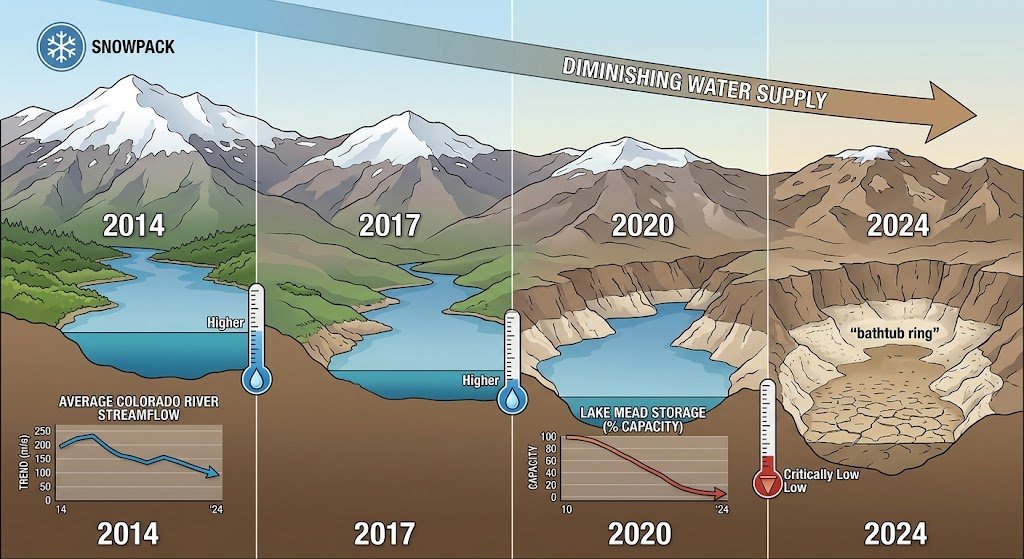
The Colorado River carries about 20% less water today than it did 20 years ago.
📉 How much drier is the Colorado River now?
The most authoritative long‑term analyses show:
River flow has declined ~20% since 2000, a reduction driven by persistent aridification, hotter temperatures, and reduced snowpack.
Average annual flows before 2000 were already lower than early‑20th‑century assumptions, but since 2000 they have dropped further to ~12.4 million acre‑feet, compared with historical averages of ~14.6 MAF.
This decline is not a temporary drought—it reflects a multi‑decade structural drying of the basin.
🔥 Why the river is so much drier
Scientific studies attribute a large share of the decline to warming temperatures, not just reduced precipitation:
A 1.5°C temperature increase over the past two decades caused an estimated 10.3% reduction in runoff, equivalent to losing the entire volume of Lake Mead.
Hotter air pulls more moisture from soils and vegetation, meaning less snowmelt reaches the river.
🏞 Reservoirs show the impact
Lake Mead and Lake Powell—once nearly full—are now at historic lows, together holding less water than at any time since 1957. This reflects the cumulative effect of two decades of reduced inflow.
📌 Bottom line
The Colorado River is roughly one‑fifth drier today than it was 20 years ago, and the drying trend is driven primarily by long‑term warming and aridification rather than short‑term weather cycles.