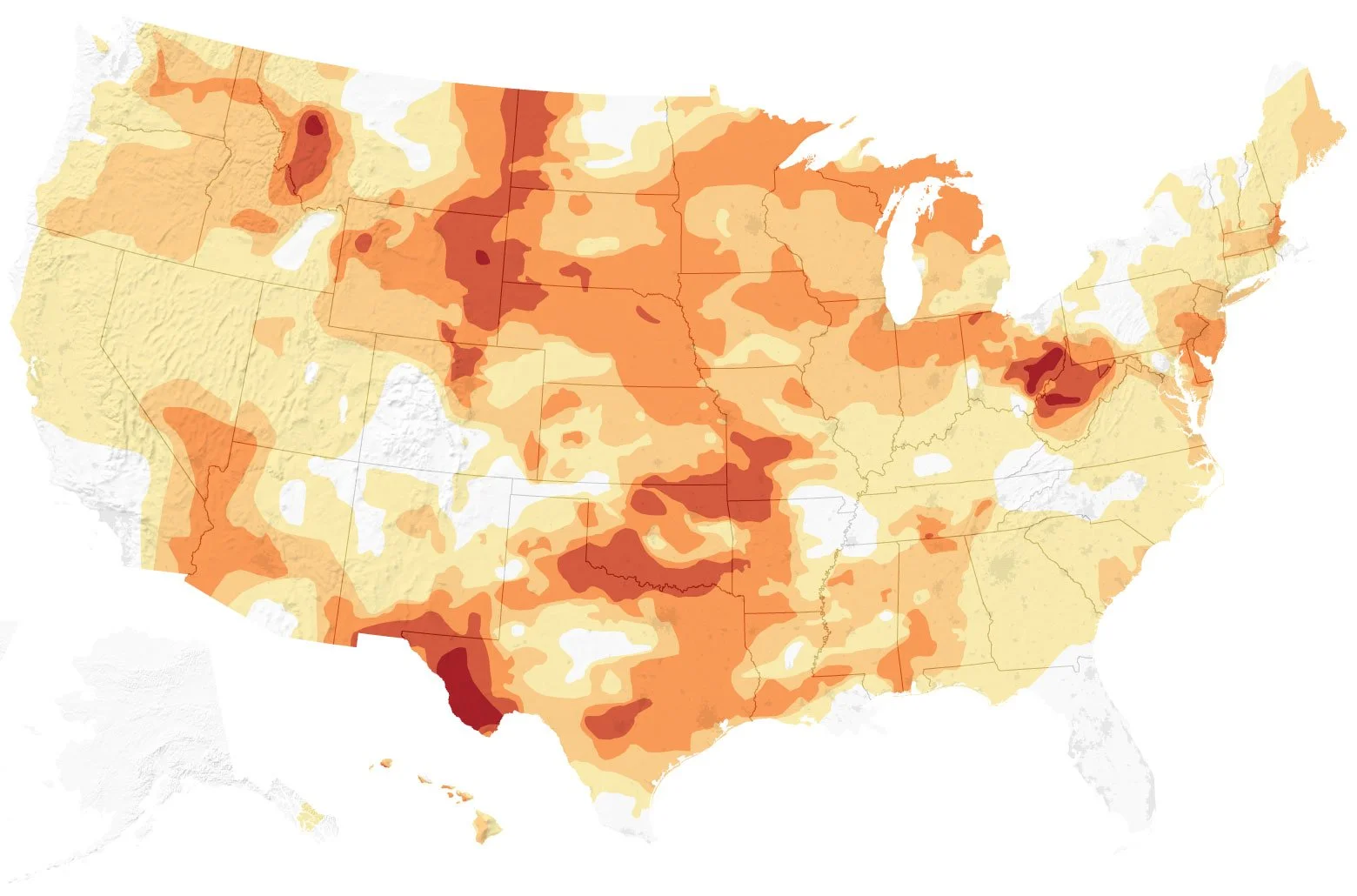
Drought is once again gripping large parts of the United States, with about 51 percent of the country now experiencing some level of dryness or drought. More than 150 million people in the contiguous U.S. are affected, underscoring just how widespread and disruptive these conditions can be.
According to Drought.gov, drought conditions currently range from abnormally dry to the most severe classifications. But today’s crisis is only the latest chapter in a long history of devastating droughts that have reshaped communities, agriculture, and the landscape itself.
The list below highlights some of the most significant droughts in U.S. history — when they struck, where they hit hardest, and how extreme they became.
Period Region Most Affected Severity
1928–1939 Dust Bowl Great Plains 66.2% of U.S. in drought (1934)
1950–1957 Southern Plains Multi-year, widespread
1961–1966 Northeast Severe water shortages
1976–1977 West 22.9% in Exceptional Drought
1987–1989 Midwest/West Rapid onset
1999–2004 West/Southeast Long-term drying trend
2012 Central U.S. 54.8% of U.S. in drought
2000–2021 Western U.S. Driest 22-year period since 800 CE
2020–2022 West Heat-driven intensification
Addressing Drought Conditions
While there are few things we can do to change drought conditions, there are things we can do to alleviate the damage it can cause. Most importantly is to use water more efficiently.
But first we must distinguish between water conservation and water efficiency.
Water conservation focuses on reducing water use during drought emergencies. Water efficiency, by contrast, is a long-term strategy centered on using water-saving technologies to accomplish the same outcomes with less water — across residential, commercial, and industrial settings alike.
5 Essential Benefits of Water Efficiency
Reduces Consumption: Advanced tech lowers the volume of water needed for daily operations.
Guards our most vital resource.
Cuts Carbon Emissions: Less water treated and moved means a smaller carbon footprint.
Lowers Energy Costs: Reducing water use saves the massive amount of electricity required to pump and heat it.
Decreases Operating Expenses: Efficient systems lead to immediate savings on utility and sewage bills.
Protects Ecosystems: Lowering demand keeps more water in natural aquifers and rivers, supporting biodiversity.