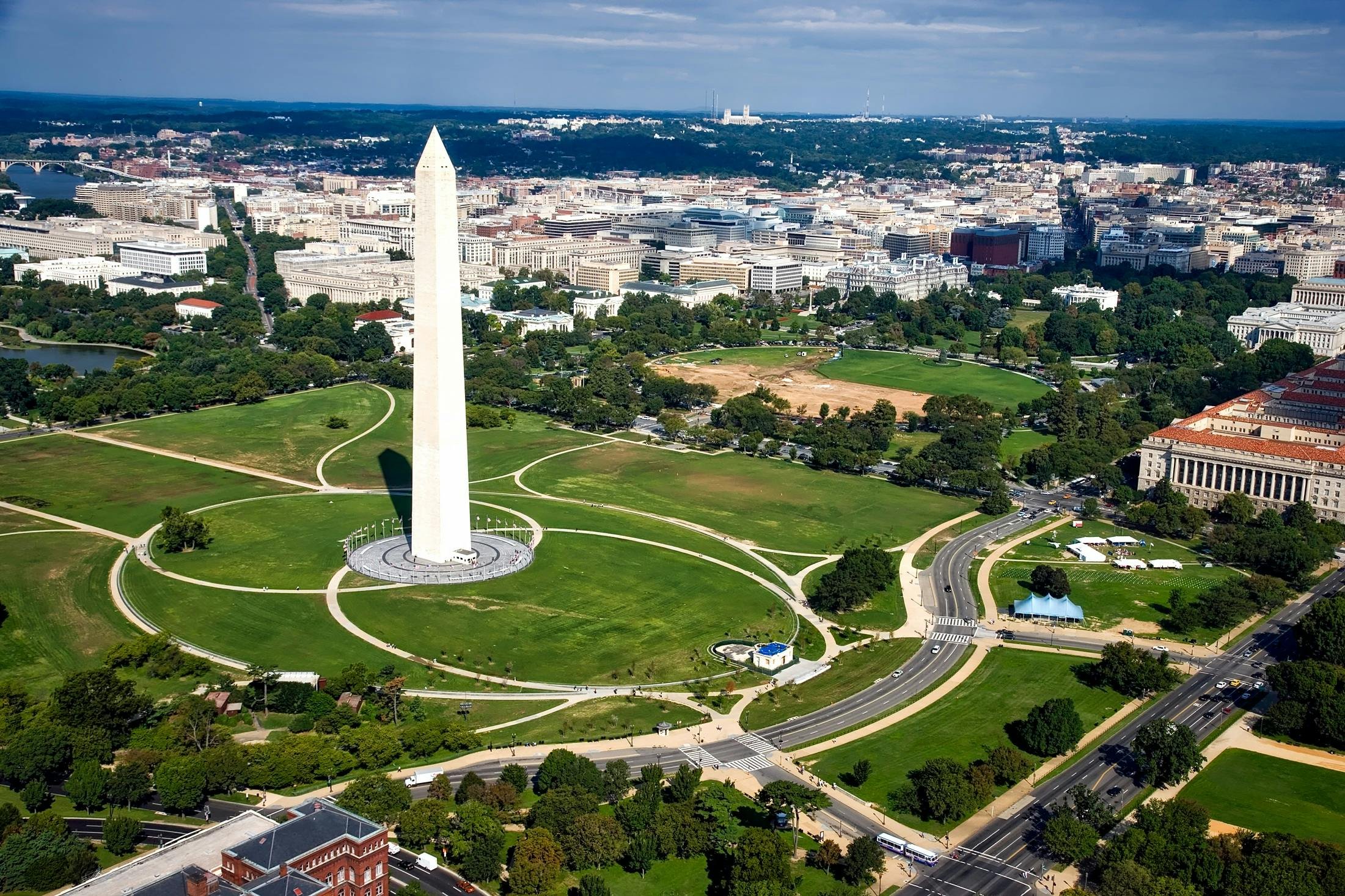
Image found on Pixaby
While most of our conversations about water focus on efficiency and conservation, a far more urgent threat is building in America's capital — one that could disable the federal government in less than a day.
The D.C. metro area depends on a single source for all of its drinking water: the Potomac River, routed through the Washington Aqueduct. No meaningful backup exists. If that one source becomes contaminated — through accident, sabotage, or natural disaster — the White House, the Pentagon, and the U.S. Capitol could lose access to safe drinking water within 24 hours.
This isn't a hypothetical scenario. It's a vulnerability that has nearly materialized several times in recent years.
A system that has already been tested — and nearly failed
2019. A freight derailment near Harpers Ferry sent chemical cars careening toward the river. The region narrowly avoided a catastrophic toxic spill into its primary water supply.
2024. A massive algal bloom clogged the aqueduct intake during Fourth of July weekend, nearly forcing officials to distribute water that fell below safe drinking standards.
2025. Hundreds of millions of gallons of raw sewage spilled into the Potomac following a sewer collapse — a stark illustration of how aging infrastructure can fail without warning.
Each of these incidents was a warning. None prompted the systemic change the region requires.
The scale of what a real failure would mean
$6B Economic loss within one month
<24h Time to loss of safe water
+12h Extension from current reserve proposals
A water failure of this scale would not merely be a public health emergency. Federal agencies, schools, hospitals, and essential businesses would face forced closures. The functioning of the U.S. government itself would be jeopardized. And the proposed fix on the table — extending emergency reserves by just 12 hours — is nowhere near sufficient for a sustained crisis.
Why no backup plan exists
The U.S. Army Corps of Engineers is examining alternative water sources, but progress has stalled. Three structural obstacles stand in the way:
Funding limits. Large-scale redundancy is expensive, and federal budgets have not prioritized it.
Political disinterest. Members of Congress representing other states have little incentive to fund D.C.'s local infrastructure challenges.
Jurisdictional gridlock. Neighboring states are reluctant to invest in infrastructure they won't own or control.
The result is a national security gap that is widely acknowledged — and widely ignored.
The second threat: what flows out
The danger isn't limited to incoming water. The Blue Plains Advanced Wastewater Treatment Plant — the largest facility of its kind in the world — sits in a high-risk flood zone. A major flood event could disable it entirely, triggering an environmental catastrophe by dumping untreated sewage directly into the Chesapeake Bay. The infrastructure that manages what leaves the region is just as exposed as the infrastructure that brings water in.
"Without federal intervention and dedicated disaster-resilience funding, Washington's water system remains a sitting duck. A contamination or flood event would quickly escalate from a local utility failure into a full-scale national security emergency."
A crisis that doesn't have to happen
The single-source failure point at the heart of the capital's water supply is not an act of nature — it's a policy choice, repeated year after year. Solving it requires federal funding, political will, and cross-jurisdictional cooperation. None of those things are technically difficult. What's lacking is urgency.
The near-misses of 2019, 2024, and 2025 suggest that urgency may arrive whether we seek it or not.
-Klaus