Across the United States, commercial real estate has been navigating a gradual, uneven recovery since the pandemic. While national office vacancy rates have hovered near the high teens—including an earlier Colliers benchmark showing 18.1% nationwide—select major metros have experienced much steeper vacancies, such as 23.8% in Los Angeles, 24.2% in Chicago, 27.9% in Houston, and 30.6% in San Francisco.
Extended vacancies affect more than landlords. Cleaning and custodial contractors often tie bids closely to occupied square footage rather than total building area alone, meaning sustained vacancy rates near or above 20% directly squeeze service revenue. At the same time, economic resilience and "flight-to-quality" trends—where tenants favor modern, well-kept spaces over dated commodity offices—have kept attention on property upkeep and tenant retention.
There is an added hurdle for property owners: data from CommercialBuildings.com indicates the average commercial building in the U.S. is more than 50 years old. In older properties, outdated mechanicals and worn common areas can make leasing harder. Few spaces signal how carefully a building is run faster than its restrooms.
What Your Restrooms Say About Your Facility
Commercial restrooms act as a silent barometer of building management. Spotless, well-maintained facilities show tenants and visitors that management cares about daily comfort and hygiene.
Cleanliness alone, however, is often just the baseline. Modernizing fixtures and adding thoughtful amenities can elevate how prospective tenants perceive the entire property, support higher satisfaction among current occupants, and protect long-term asset value. Some operators even design larger or quieter restroom suites to double as brief, calming resets away from a fast-paced workday.
How to Plan a Commercial Restroom Renovation
Turning a dated restroom into a high-performing space comes down to balancing durability, operating costs, accessibility, and user comfort:
Install touchless fixtures: Sensor-activated faucets, flush valves, soap dispensers, and hand-drying or paper towel systems reduce high-touch contact points and help curb water and supply waste. Choose commercial-grade hardware built for heavy daily traffic.
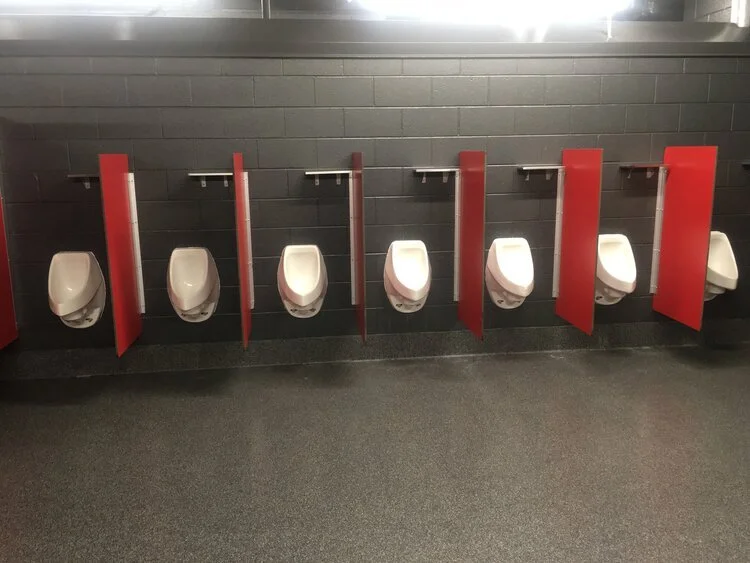
Prioritize water efficiency: Restrooms and outdoor landscaping account for a large share of commercial water use. Specifying high-efficiency toilets rated at 1.28 gallons per flush (gpf) or less alongside waterless urinals can lower utility expenses and support sustainability goals.
Add smart supply and maintenance alerts: Connected dispensers and occupancy or usage sensors can alert custodial teams when soap, paper, or tissue runs low or when plumbing needs attention—helping staff stay ahead of restocking instead of reacting to complaints.
Design for warmth and durability: Pair hard-wearing surfaces—such as quartz or solid-surface countertops, porcelain or terrazzo flooring, and wipeable wall finishes—with intentional lighting. Avoid harsh fluorescent glare and overly cold, clinical lighting; warm-toned LEDs, accent lighting, and well-cared-for greenery can make the space feel far more inviting.
Verify current accessibility requirements: Rather than assuming federal rules update on a fixed five-year cycle, verify that layouts, clearances, door hardware, and fixtures meet current ADA Standards for Accessible Design as well as applicable state and local building codes whenever you remodel.
Build in inclusive access: Features like properly placed grab bars, accessible lavatory clearances, and spacious stalls help ensure everyone can use the facility comfortably and with dignity.
Match amenities to the building type: Add practical extras—such as baby changing stations, full-length mirrors, or extra hook and counter space—when they fit the building's occupants and traffic profile. A corporate headquarters calls for a very different finish and amenity level than a light-industrial or manufacturing facility.
Share sustainability efforts clearly: Subtle, informative signage highlighting water-saving fixtures or greener cleaning practices lets building users see the environmental value behind the upgrade without cluttering the design.
Treating Restroom Updates as a Strategic Investment
Renovating commercial restrooms is more than a cosmetic refresh—it is a visible commitment to tenant experience and operational standards. In a competitive leasing market where older buildings must work harder to stand out, a modern, well-kept restroom can help attract new tenants, keep existing ones longer, and strengthen a property's overall market position.
Waterless Co., Inc Staff