Water Charge Increases Cause School Districts to Consider Going Waterless

Save Water

Starting October 2017, people living in San Lorenzo Valley, southeast of San Francisco, will be paying far more for water.  The local water district has revamped its tiered charges, where property owners essentially paid for water based on their usage, to a flat rate, which will continue to go up year after year for at least five years.

So, this means that a homeowner, currently paying $65 per month, the average residential water bill in the Valley, will see their bill increase by 37 percent, approaching $90 per month.  By 2021, that statement will go up to $110 per month.

According to the water district, the increase is necessary to fund long-overdue infrastructure improvements.  This is happening in water districts all over the country. This means we can expect many more home and building owners will also see their water and sewer related charges take a big monthly jump.

As you can imagine, this rate increase in San Lorenzo Valley was not welcome news. Nor is it or will it be in other areas of the country when they find out their charges are also going up.  In the Valley, more than 3,000 people wrote protest letters.  “A number of individuals for justifiable reasons opposed the rate increase because they are on fixed incomes,” said Brian Lee with the local water agency. “Seniors come to mind first, and we recognize this is going to be a burden.”

But seniors are certainly not the only ones protesting.  The San Lorenzo Valley School District expects to pay more than $60,000 in increased charges starting in 2018, equivalent to an average teacher’s salary.  The school district is upset because unlike business owners and landlords, they cannot pass on these charges to anyone else.  In other words, it comes right out of the district’s operating expenses, leaving a big dent.

However, there is a bright side to this story, at least for the school district. They are now looking into a variety of ways to reduce water consumption, and one that is on top of their list is to transfer from water using to no-water urinals, better known as waterless urinals.

There are a number of reasons to consider installing waterless urinals, especially for a school district. First of all, the flush handles on water using urinals get a lot of abuse in public schools. Flush handle abuse often means the urinal keeps releasing water or releases too much water per flush, which is wasteful and costly.

Along with abuse, flush handles are often vandalized. Why they are such a favorite target, no one knows. But for school administrators, urinal vandalism along with damage flush handles not only may result in costly water being wasted, invariably the flush mechanisms must be repaired or replaced, which can also be expensive.

But here is the big reason the school district is likely considering installing waterless urinals. Each urinal can save more than 30,000 gallons of water per year.  Let’s say one Valley public school has ten waterless urinals installed.  That means more than 300,000 gallons of water can be saved. 

Very often, just by installing waterless urinals, water use reduction goals are met so that few other water reduction strategies are necessary.  This means water and cost savings are all possible, just by going waterless.

For more information on waterless urinals, contact a Waterless Co representative at 800 244 6364.

Surprising Facts About Urinals

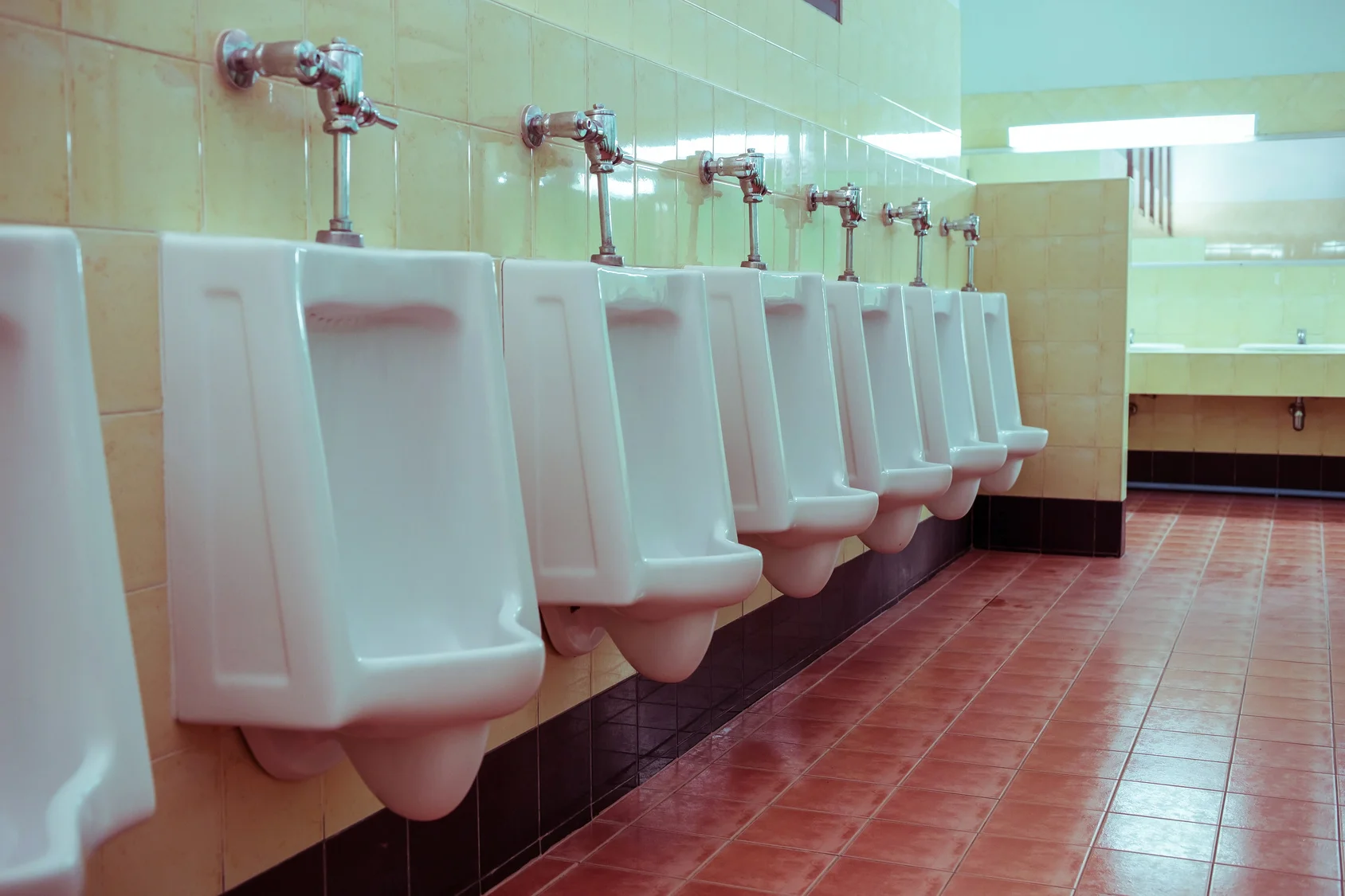
old flushed urinals waterless urinal

Urinals are not something we think about very often - women, probably never - but the truth is that urinals have a long and storied history and women have played a role in its evolution.
 
"For instance, it is believed that a woman actually invented the first urinal during the civil war," says Klaus Reichardt, CEO and founder of Waterless Co, Inc. "However, in the 1800's women could not register a patent, so Andrew Rankin followed her and was awarded the first urinal patent in 1886."
 
Reichardt lists some other surprising urinal facts such as the following:
 
 • The oldest waterless urinal was found a few years back in Sri Lanka. The urinal dates back to the 9th century.
 
 • The U.S. industrial revolution made urinals famous. Factories hired hundreds of men, which meant large areas of the factory floor had to be designated for restrooms. By installing urinals, less restroom space was necessary.

To read more from this article on CleanLink.com click here.

Water, Water Everywhere...

...and Not a Drop to Waste


I would bet that there’s hardly a sustainability professional anywhere who isn’t facing the issue of water management. We’ve all heard the stats: If we continue with business as usual, global demand for water is estimated to exceed available resources by 40% by 2030.

So whether companies are facing water issues head-on, with major initiatives to reduce water use (like INEOS and Intel) or are just beginning to explore the topic, sustainability execs understand the significance of the problem. And they know that the challenge of carefully managing water as a resource will only increase.

Mulling this topic, I took a look at some stats on what Environmental Leader stories you’re reading, and wasn’t surprised when I found that the “water management” category is one of the top five links our readers are clicking – and it has been for at least the past year.

To read more from this article on Environmental Leader, please click here .

Are Low Water Rates Good or Bad for Consumers?

It’s no secret that the aging US water infrastructure requires significant modernization. Many of the approximately 1 million miles of pipe systems delivering water to homes and businesses in the US were built post-World War II with an average lifespan of 75 to 100 years, according to the 2017 Infrastructure Report Card. That aging infrastructure is wasting 2 trillion gallons of treated drinking water resulting from about 240,000 water main breaks each year, the report indicates.

In 2014, Congress authorized a federal credit program administered by the EPA to fund vital water and wastewater infrastructure improvements, known as the Water Infrastructure Finance and Innovation Act. In response to a notice of fund availability, the program received 43 letters of interest from water districts, utilities and entire cities and counties highlighting needed improvements to water infrastructure totaling about $12 billion. As WIFIA offers up to 49 percent of project costs, an additional $6 billion is needed from local agencies, private enterprise and private-public partnerships.

While that may seem like a hefty sum, it pales in comparison to the $1 trillion the American Water Works Association estimates it will take to maintain and improve water infrastructure in the US in the next 25 years.

Read more at Environmental Leader by clicking here

Anti-Drought: Water Officials Hope to Drive Up Water Usage

Today we learned via the Voice of San Diego website...

By Ry Rivard | August 31, 2017

In a jarring contrast to conditions during the drought, the San Diego County Water Authority is actually trying to drive up demand for its water.

As recently as the first months of this year, Californians were asked to conserve water. Well, they did. And they still are. Now, that’s a problem.

Demand for water is low. In San Diego, it’s so low that drinking water is just sitting in the main pipeline that delivers water from hundreds of miles away to the southern half of the county. Typically demand for water is highest during the summer.

When water sits around, particularly in the summer heat, it stagnates and can become undrinkable.

To keep water moving, the Water Authority’s staff is talking about ginning up demand for water by offering incentives to several water agencies, including the city of San Diego’s water department. This wouldn’t necessarily result in profligate water use, because the Water Authority may just want agencies, like the city water department, to switch from the cheaper water they have stored in their own reservoirs to more expensive water that the Water Authority sells them.

To read more, please visit the original article here: http://www.voiceofsandiego.org/topics/government/call-anti-drought-water-officials-hope-drive-water-usage/