EcoTrap® Drain Insert: Long-Lasting Odor Control for Waterless Urinals

EcoTrap from Waterless Co., Inc.

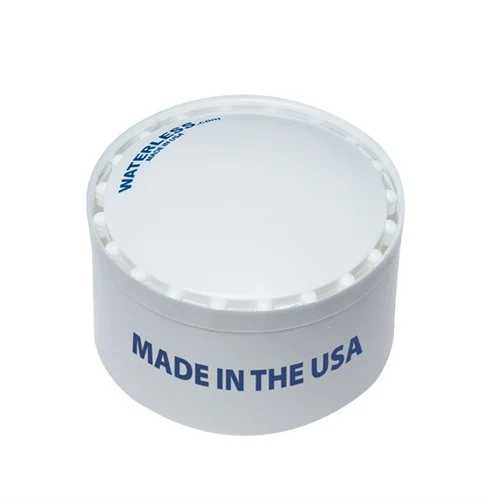
EcoTrap® is a durable drain insert made for Waterless Co. Inc No-Flush™ urinals. It helps keep sewer gases and unpleasant odors out of restrooms while allowing urine to move efficiently through the fixture and into the drain line.  

Used with Waterless Co. Inc’s BlueSeal® odor-control liquid, EcoTrap creates a dependable barrier that supports a cleaner, more comfortable restroom environment—without requiring flush water.  

How EcoTrap® Controls Odors

The system uses a straightforward design. Urine passes through the EcoTrap insert and drains normally, while the BlueSeal liquid forms a protective layer inside the insert.  

That liquid seal helps prevent sewer vapors from traveling back through the urinal bowl and into the restroom.  By pairing a physical drain insert with a liquid odor barrier, EcoTrap helps facilities maintain waterless urinals with consistent odor control and minimal routine attention.  

Extended Service Life

A major benefit of EcoTrap is its replacement interval. Depending on traffic and restroom conditions, one insert can accommodate roughly 10,000 to 15,000 uses and remain in service for as long as six months.  

Compared with waterless urinal systems that rely on shorter-life trap cartridges or cylinders, this can mean fewer service visits and fewer replacement components over time. For facility teams, the longer lifespan may help lower maintenance labor, reduce supply consumption, and make restroom upkeep more predictable.  

Simple Replacement Process

EcoTrap is engineered specifically for Waterless Co. No-Flush™ urinal models. The recyclable plastic insert is pressed directly into the bowl’s drain opening during installation.  

When the insert has reached the end of its service life, maintenance staff can use the included X-Traptor™ removal tool to lift it out for replacement. This straightforward process helps reduce the time required for routine urinal maintenance.  

Key EcoTrap® Benefits

  • Helps block sewer odors and vapors from entering restrooms

  • Allows urine to drain freely through the urinal

  • Works with BlueSeal® liquid to maintain an odor-control barrier

  • Handles approximately 10,000–15,000 uses, depending on conditions

  • Can last up to six months before replacement is needed

  • May reduce replacement frequency, labor requirements, and maintenance costs

  • Made from recyclable plastic

  • Includes an X-Traptor™ tool for convenient removal

  • Designed for Waterless Co. No-Flush™ waterless urinals  

EcoTrap® gives facilities a practical option for managing waterless urinal odors while extending the time between replacements. Its combination of long service life, simple maintenance, and BlueSeal-supported odor protection can help facility managers maintain reliable, clean and healthy, no-flush restroom urinals.  

For product information or assistance, call 1-800-244-6364 or visit Waterless.com.
Public Restrooms Around the World: A Traveler's Guide to Local Customs and Laws

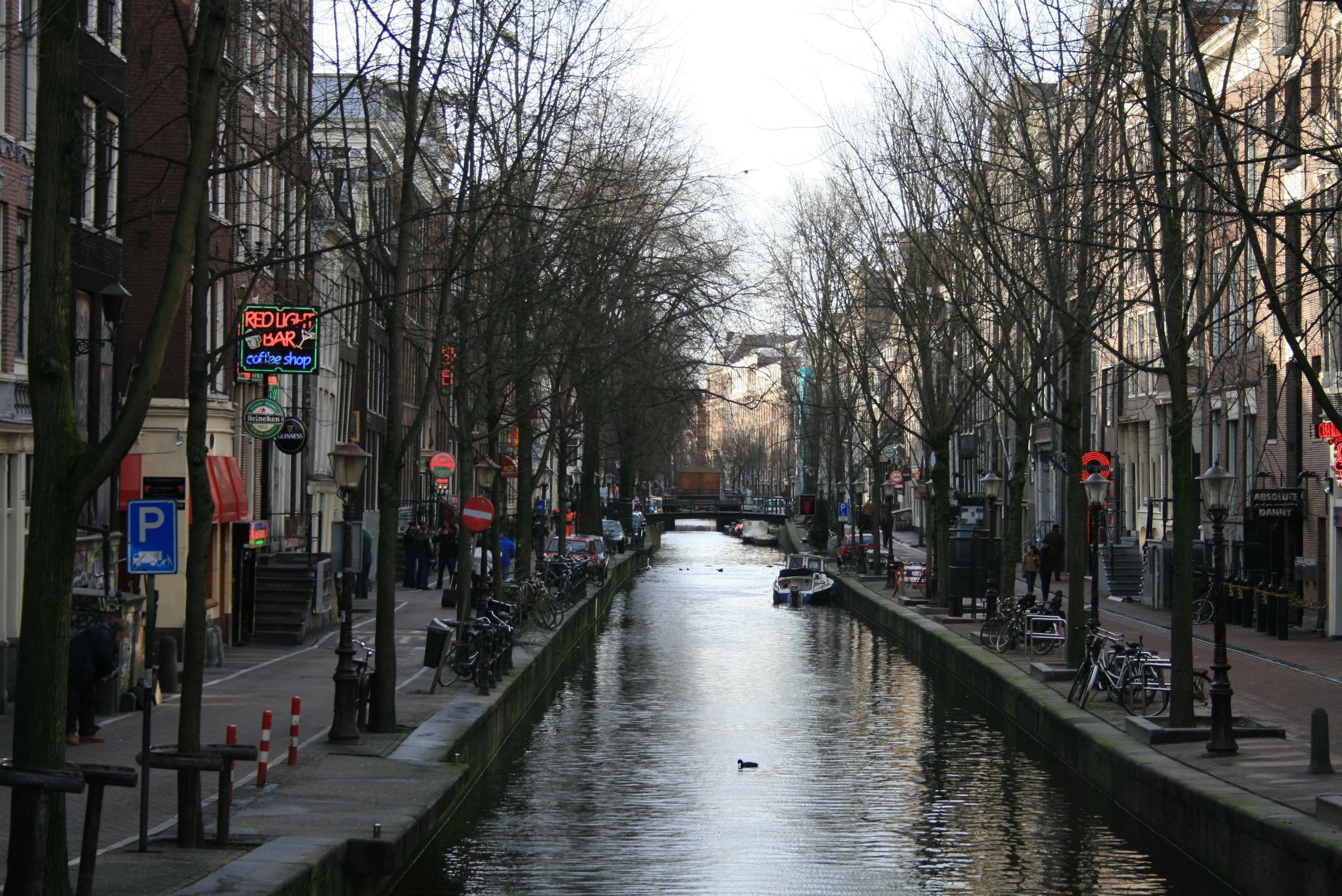
Amsterdam by Li Yew.

Culture shock hits in all kinds of places abroad — and one of the most common is the restroom. Bringing your own tissue is smart in regions where paper isn't standard, but the bigger hurdle is usually just locating a restroom that's clean and open to the public in the first place.

Sanitation norms shift dramatically from country to country. Below is a rundown of how public restrooms — and urinals specifically — differ around the world, plus what to know so a bathroom break doesn't turn into a fine.

How Restroom Norms Differ by Region

Streetside Urinals (Western Europe): In Amsterdam, Paris, and Brussels, you'll spot open-air urinals — pissoirs or Uritrottoirs — placed right on busy streets to cut down on public urination. Don't expect much privacy; these are built for speed, not seclusion.

Squat-Style Toilets (Asia, Africa, the Middle East): Across much of the non-Western world, the standard is a floor-level squat toilet. Rather than toilet paper, most rely on a hose, bucket, or bidet sprayer for cleanup — so it helps to know the setup before you go.

Coin- or Card-Operated Restrooms (Continental Europe): Train stations, malls, and public squares often gate their restrooms behind a turnstile that takes coins or a card, usually somewhere between €0.50 and €1.50.

Water-Based Cleaning (Southern Europe, the Middle East, East Asia): Paper takes a back seat to water in many cultures. Italy and Portugal favor standalone bidets beside the toilet, while Japan is known for washlets — heated seats with built-in water jets.

Staying Legal (and Polite) Abroad

Public urination has real consequences. Laws — and fines — vary but are enforced seriously in major cities:

  • Vienna: up to €700

  • Amsterdam: €160 for wildplassen

  • Paris: fines starting at €68, with some neighborhoods even using urine-repellent paint on walls

  • United States: typically a misdemeanor or public-nuisance charge, with penalties depending on the city

Watch what you Flush.

In places with older or more delicate plumbing — rural Greece, Thailand, and parts of Latin America among them — paper and wipes usually go in a bin next to the toilet, not down it, to avoid clogging the system.

Carry small bills and coins. Pay-to-enter restrooms rarely make change, so having local currency on hand saves a headache.

Where Sustainable Design Fits In

Alongside these regional customs, waterless urinals are becoming more common worldwide — a low-maintenance option that supports better hygiene while conserving millions of gallons of water each year.

Curious how waterless technology could work for your facility? Reach out to a specialist at Waterless Co., Inc.

Sonora No-Flush Urinal From Waterless Co., Inc.

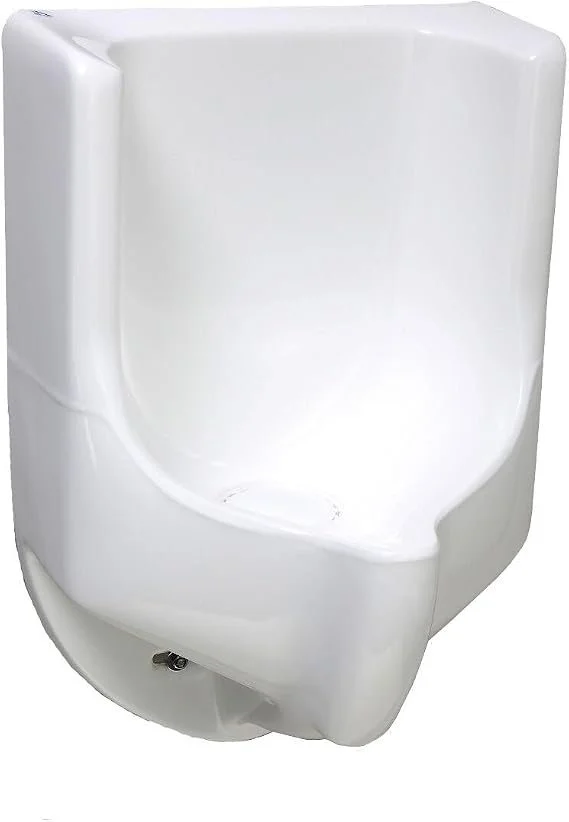
The Sonora™ No-Flush™ Urinal helps commercial facilities reduce water use, simplify restroom maintenance, and create a cleaner experience for visitors, all without a full restroom redesign. Marketed by Waterless Co., Inc., the Sonora is built for restrooms that need durable, low-maintenance fixtures, easier retrofits, and reliable odor control.

Simple Installation for Faster Retrofits

The Sonora connects to the drain line with a gasket and flange, the same way a traditional flush urinal does. No adaptors are needed, and the unit typically fits the footprint of the urinal it replaces. With compatible rough-in dimensions, installation typically takes about an hour, which keeps retrofits fast and minimizes disruption for plumbers and building operations.

Vandal-Resistant Closed-Bottom Design

Sonora’s closed-bottom design helps prevent vandalism, so it holds up in high-traffic public restrooms such as schools, stadiums, and airports.

Full 2-Inch Interior Drain Line for Easy Cleaning and Access

A full 2-inch interior drain line gives maintenance crews easy line cleaning and access whenever it's needed, helping keep the fixture running smoothly for the long term.

EcoTrap® Odor Control for Clean, Fresh-Smelling Restrooms

The Sonora uses Waterless Co.'s EcoTrap® system to block sewer odors from escaping into the restroom, helping maintain a cleaner, fresher space for visitors, employees, and customers.

Key Features at a Glance

No flushing required

Gasket-and-flange installation, no adaptors needed

Fits the footprint of most removed flush urinals

Closed-bottom, vandal-resistant design

Full 2-inch interior drain line for easy access and cleaning

EcoTrap® system for reliable odor control

Ready to upgrade your restrooms? Visit waterless.com or call toll-free at 800-244-6364 to learn more about the Sonora No-Flush Urinal.

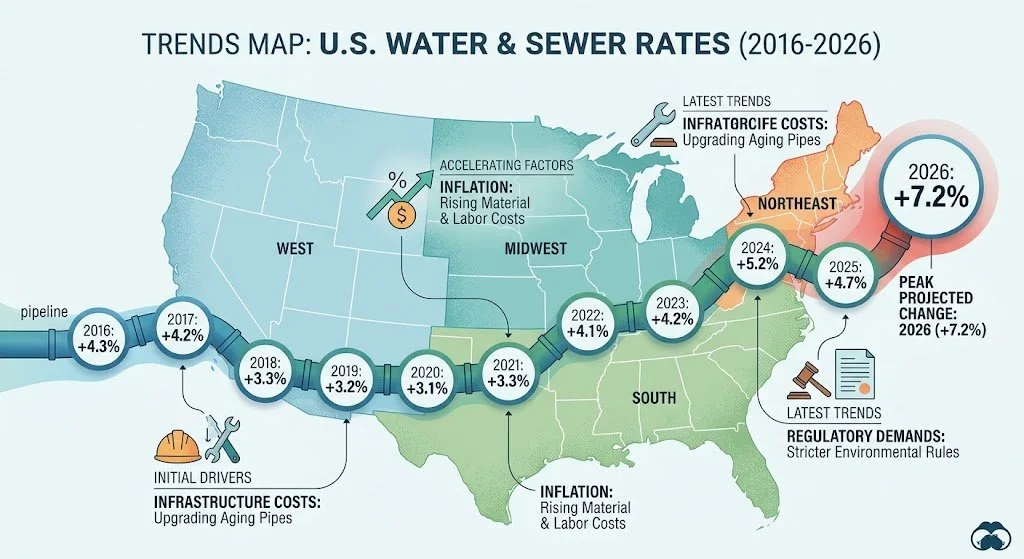
Tapped Out: How U.S. Water and Sewer Rates Rose From 2016 to 2026

AI Generated

Why the Increases:

1. Aging Water Infrastructure

The U.S. Environmental Protection Agency's most recent Drinking Water Infrastructure Needs Survey and Assessment estimates the country needs $625 billion in improvements to drinking water systems over the next 20 years — a 32 percent increase over the prior survey. Factor in wastewater and stormwater needs from EPA's 2022 Clean Watersheds Needs Survey, and the total national infrastructure gap exceeds $1.2 trillion. Utilities are raising rates now to start funding those repairs.

2. Shrinking Federal Support

The federal government once covered most of the cost of water collection and delivery. Programs like the Bipartisan Infrastructure Law have added some funding in recent years, but nowhere near enough to close the gap — leaving states, municipalities, and ratepayers to cover more of the cost themselves.

3. Utility Bills Are Absorbing Costs Once Covered by Property Taxes

To avoid politically unpopular property tax hikes, many local governments are shifting water system costs onto utility bills instead — a quieter, but no less real, increase for building owners and tenants.

4. Population Growth in Water-Stressed Regions

Some of the fastest-growing parts of the country, including much of the Sun Belt and the West, are also the regions facing the greatest water supply challenges. Growth is putting additional strain on already limited resources.

5. Fewer Clean Water Sources

Pollution, contamination, and environmental degradation continue to shrink the pool of rivers, lakes, and aquifers utilities can safely draw from — tightening supply even as demand holds steady or grows.

6. Shifting Climate Patterns

Changes in precipitation and snowmelt are straining the water systems that communities depend on for health, agriculture, and energy production, pushing utilities to invest heavily in resilience and alternative supply.

7. Basic Supply and Demand

As reliable water supplies tighten under the pressures above, prices rise to match. It's the same economic principle that governs any limited resource — water is no exception.

Why Water Rates Keep Going Up

Image found on Pixaby

The cost of water keeps going up, as most facility managers know. In fact, in many cases the cost of water is rising sharply, with even steeper increases anticipated ahead.

In the Chicago area, for instance, suburbs supplied through the city's Lake Michigan water system saw a 4 percent wholesale rate hike take effect at the start of 2026, and several nearby municipalities — from La Grange Park to Oak Lawn's south suburban customers — passed multi-year rate increases along to residents and businesses this year to keep pace.

So why is the cost of water escalating so fast? After all, historically it has been one of our least expensive natural resources in the United States. The truth is that water has been underpriced for decades. Utility companies are now adjusting charges so they better reflect the actual cost of collecting, storing, and delivering water to consumers.

But there's more to it than that. Drawing on analysis from engineers at firms like Affiliated Engineers, here are seven other reasons the cost of water keeps climbing in the United States:

Old infrastructure. The U.S. Environmental Protection Agency's most recent Drinking Water Infrastructure Needs Survey and Assessment puts the 20-year investment need at $625 billion just to keep drinking water systems functioning — a 32 percent jump from the previous survey. Add in wastewater and stormwater needs identified in EPA's 2022 Clean Watersheds Needs Survey, and the combined national infrastructure gap tops $1.2 trillion over the next two decades. Utility bills are climbing now to start closing that gap.

Loss of federal funds. For decades, the federal government covered the lion's share of the cost to collect and deliver water. Programs like the Bipartisan Infrastructure Law have added funding in recent years, but it still falls well short of the need, leaving states and local utilities to pick up more of the tab through rate increases.

Accounting changes. To avoid raising taxes, many communities are shifting the cost of supplying and maintaining water systems from property taxes onto utility bills instead.

Demographics. Some of the fastest-growing regions of the country are also the ones facing the greatest water challenges, including much of the Sun Belt and many Western states.

Reduced access to clean water. The number of rivers, streams, lakes, and other sources utilities can draw from keeps shrinking due to pollution, contamination, and related pressures.

Climate change. Shifting precipitation and snowmelt patterns are straining the water resources communities rely on to meet human health, food, and energy needs — and utilities are investing heavily in resilience to adapt.

Supply and demand. Basic economics is at play, too. As reliable supplies tighten in the face of the pressures above, costs go up. Water is no exception.

This leaves facility managers with two choices:

1.    Pay ever-increasing costs for water and try to pass those costs on to building tenants.

2.    Find effective ways to conserve water, such as low-flow and no-flow restroom fixtures.

For both the short and long term, the only real way for managers to get ahead of rising water costs is to reduce water consumption. Waterless urinals are one proven way to do it.

El Reno Data Center Water Leak Sparks Fresh Concerns Over AI and Crypto Infrastructure

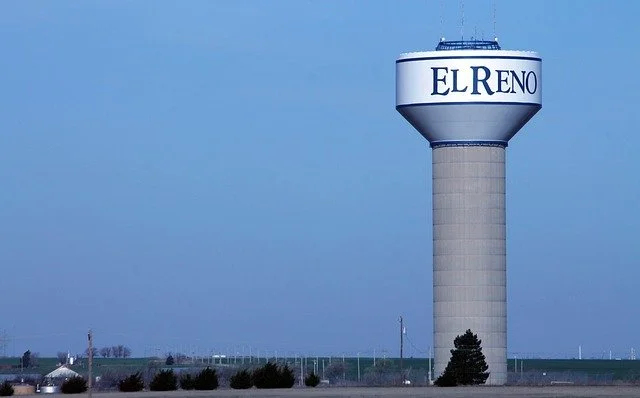
Image found on Pixaby

A 3-million-gallon water leak at an Athlon BT data center in El Reno, OK, raises serious concerns over municipal water use, AI infrastructure, and drought risks.

A private water line failure at an Athlon BT facility in El Reno, Oklahoma, resulted in the loss of over 3 million gallons of municipal water before local authorities discovered the breach in late August 2026. The incident has intensified scrutiny around the environmental footprint and utility consumption of large-scale data facilities.  

Infrastructure Failures and Municipal Violations

The massive leak originated from a private line connected to an on-site fire hydrant at the complex, which runs high-density air- and water-cooling systems for artificial intelligence processing and Bitcoin mining. Following a site investigation, city inspectors cited the facility for multiple regulatory and safety infractions:

  • Infrastructure Failure: Catastrophic breach in private line integrity causing massive volume loss.

  •  Permitting & Occupancy: Operating without complete municipal approvals and documentation.  

  • Environmental & Drainage: Inadequate runoff controls and improper wastewater routing.  

  • Safety Classifications: Missing critical hazard ratings for high-density computing operations.  

Escalating Resource Management Concerns  

The loss of millions of gallons of treated water sparked immediate backlash from El Reno residents, raising alarms over regional grid stress and municipal water security during nationwide dry spells.  

“While this is just one incident at one data center, it amplifies concerns about the critical need for efficient water management,” said Klaus Reichardt, CEO and founder of Waterless Co., Inc. “That is particularly urgent today as severe drought conditions continue to expand across the country.”

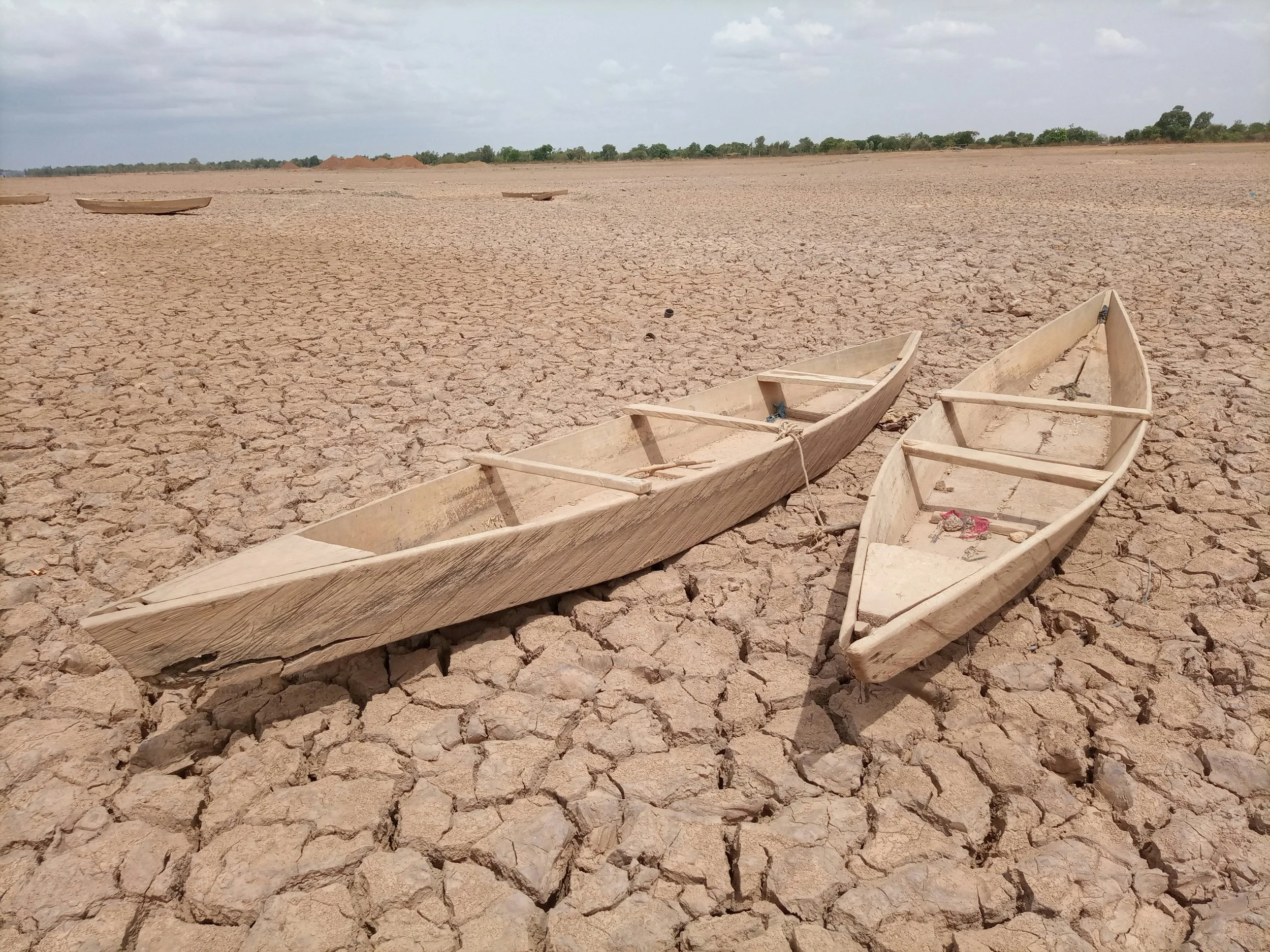
The Six Cities Facing Severe Water Challenges Right Now

Image by Yoda Adimin

Cape Town, South Africa

  •  After narrowly escaping "Day Zero," Cape Town has become a benchmark for municipal water efficiency. However, persistent multi-year drought risks, severe weather events across southern Africa, and ongoing population growth continue to test its modernized infrastructure.  

Mexico City, Mexico

  •  Mexico City's water situation has reached critical levels. In 2024, the Cutzamala reservoir system hit historical lows of around 27percent capacity due to prolonged droughts and El Niño conditions. Hundreds of neighborhoods now face regular rationing, and groundwater extraction continues to deplete underground aquifers faster than they can recharge.  

São Paulo, Brazil

  •  Severe conditions have returned following several consecutive years of below-average rainfall. The city's key Cantareira reservoir system has faced renewed pressure due to surrounding deforestation in the Amazon and aging infrastructure that loses roughly 29 percent of its treated water to leaks before reaching taps.  

Beijing, China

  •  Over-extraction, rapid urbanization, and agricultural demand remain severe strains. While massive engineering projects like the South-to-North Water Diversion continue to supply the capital, surface water pollution and the imbalance between feeding China's vast population and powering major urban centers keep water security on a tightrope.  

Los Angeles, California

  •  Following historic multi-year droughts and critical cutbacks along the Colorado River Basin, Los Angeles and the broader Southwest continue to manage tight allocations. Groundwater overdraft and reduced snowpack levels keep long-term water solvency a central focus of California's state environmental policy.  

Bengaluru (Bangalore), India

  •  Rapid expansion in India's technology hub led to severe water crises in 2024 and ongoing stress in subsequent dry seasons. The city relies heavily on water tankers and daily hauling, as local lakes remain polluted and groundwater tables are drastically depleted.  

“The United Nations predicts this decade will be our most difficult in history when it comes to water,” says Klaus Reichardt, CEO and Founder of Waterless Co., Inc. “Our only option is to reduce consumption and use water more efficiently.”


Water Efficiency Guide: Benefits, Key Upgrades & Action Plan

FOR IMMEDIATE RELEASE

Date: September 11, 2026

Media Contact: Robert Kravitz | Public Relations & Media Communications

Email: robert.kravitz@outlook.com


Water Efficiency Guide: Benefits, Key Upgrades & Action Plan

New Strategic Framework Outlines Permanent Solutions to Help Commercial Facilities and Communities Combat Growing Water Scarcity and Rising Operational Costs

Vista, Ca — As population growth, persistent drought, and aging infrastructure continue to strain municipal water supplies across the country, businesses and facility managers face mounting pressure to reduce water consumption.

A newly released industry overview titled "Water Efficiency: What It Is, Why It Matters, and How to Improve It" highlights practical strategies for commercial, industrial, and residential properties to achieve permanent water savings without compromising operational performance.

 The guide, found on LinkedIn, emphasizes a critical distinction that is often overlooked in sustainability planning: the difference between water conservation and water efficiency.

While conservation focuses on temporary behavioral reductions during shortages, water efficiency delivers permanent, long-term structural reductions by upgrading technologies, eliminating waste, and optimizing system performance.

"Water efficiency is about getting the greatest possible benefit from every gallon," said Klaus Reichardt, CEO and Founder of Waterless Co., Inc. "The smartest way to manage water is either to find ways not to use it at all or to ensure that if a gallon of water must be used, it accomplishes its job perfectly without requiring another gallon to back it up."

 Key Benefits of Commercial Water Efficiency

•         Protects Critical Water Resources: Stretches local water supplies and reduces pressure on rivers, lakes, and underground aquifers without costly infrastructure expansions.

 •         Lowers Operational & Utility Expenses: Yields direct savings on water and sewer bills, alongside reduced energy costs for water pumping, heating, and treatment.

 •         Strengthens Climate Resilience: Prepares commercial facilities to maintain full operational continuity during droughts and municipal water restrictions.

 •         Reduces Wastewater Demands: Decreases overall discharge volume into municipal collection and treatment facilities.

Ten Step Roadmap 

To assist facility managers in starting or upgrading their water management programs, the guide lays out a structured, 10-step practical roadmap:

 1.       Establish a Baseline: Evaluate historical utility bills and consumption patterns.

 2.       Conduct a Water Audit: Identify key usage zones, high-volume fixtures, and system losses.

 3.       Address Leaks Instantly: Perform regular inspections of plumbing, cooling systems, and irrigation lines.

 4.       Target High-Volume Areas: Focus early capital expenditures on high-use fixtures to maximize return on investment (ROI).

 5.       Upgrade Legacy Plumbing: Install high-efficiency toilets (1.28 GPF or lower), low-flow aerators, and no-water restroom technologies such as waterless urinals.

 6.       Optimize Irrigation: Deploy smart weather-based controllers and drip systems to prevent evaporation and runoff.

 7.       Implement Submetering: Install multi metering systems to track consumption across individual building zones or mechanical systems.

 8.       Explore On-Site Water Reuse: Recapture non-potable water for secondary industrial or landscape applications.

 9.       Engage Building Occupants: Train staff and tenants on proactive water-saving habits.

 10.     Track & Measure Results: Continuously monitor utility savings and operational performance over time.

 ### 

About Waterless Co., Inc.

Established in 1991, Waterless Co., Inc. is a pioneer in commercial water efficiency and non-water plumbing technology. Headquartered in Vista, California, the company specializes in manufacturing innovative, high-performance waterless urinals and sustainable restroom solutions that help commercial buildings lower operating costs, conserve natural resources, and advance facility sustainability worldwide. 

Growth of the Global Waterless Urinal Market Through 2033

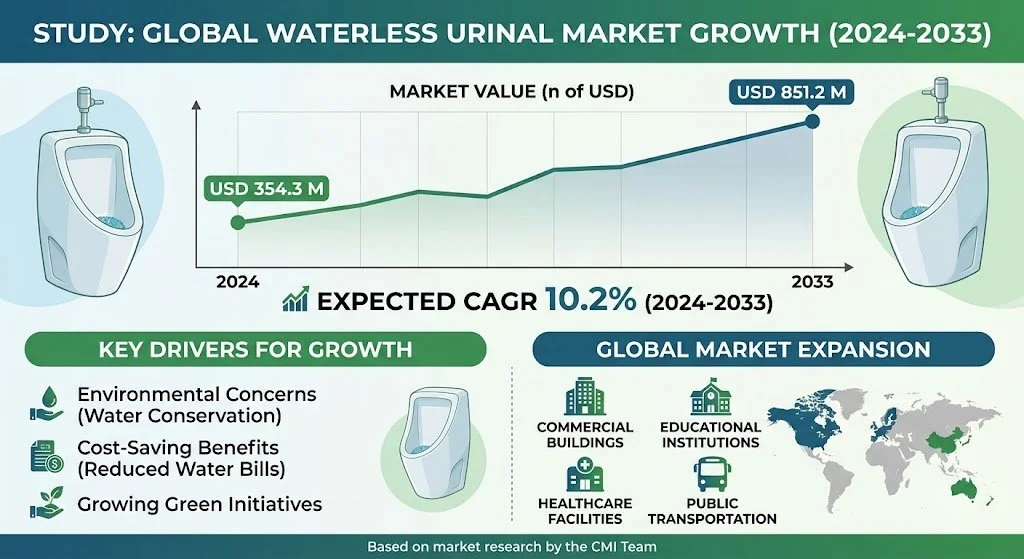
According to current market research by the CMI Team, the global Waterless Urinal Market is projected to grow at a CAGR (Compound Annual Growth Rate) of 10.2% from 2024 to 2033, rising from USD 354.3 million in 2024 to USD 851.2 million by 2033.

Market growth is being driven by increasing pressure to reduce water consumption, lower utility costs, and limit wastewater output. Waterless urinals support these goals by using specialized cartridge or sealing technologies that eliminate the need for flushing water.

Adoption is gaining momentum across commercial buildings, educational institutions, transportation hubs, and public facilities as organizations align restroom infrastructure with sustainability targets and operating-cost reduction strategies.

As water-efficiency regulations become more stringent and facility owners prioritize measurable conservation outcomes, the market is positioned for continued expansion across both developed and emerging economies.